Conservation Treatments for Records, Maps and Bound Volumes, Step by Step
 Elias BrandtLast reviewed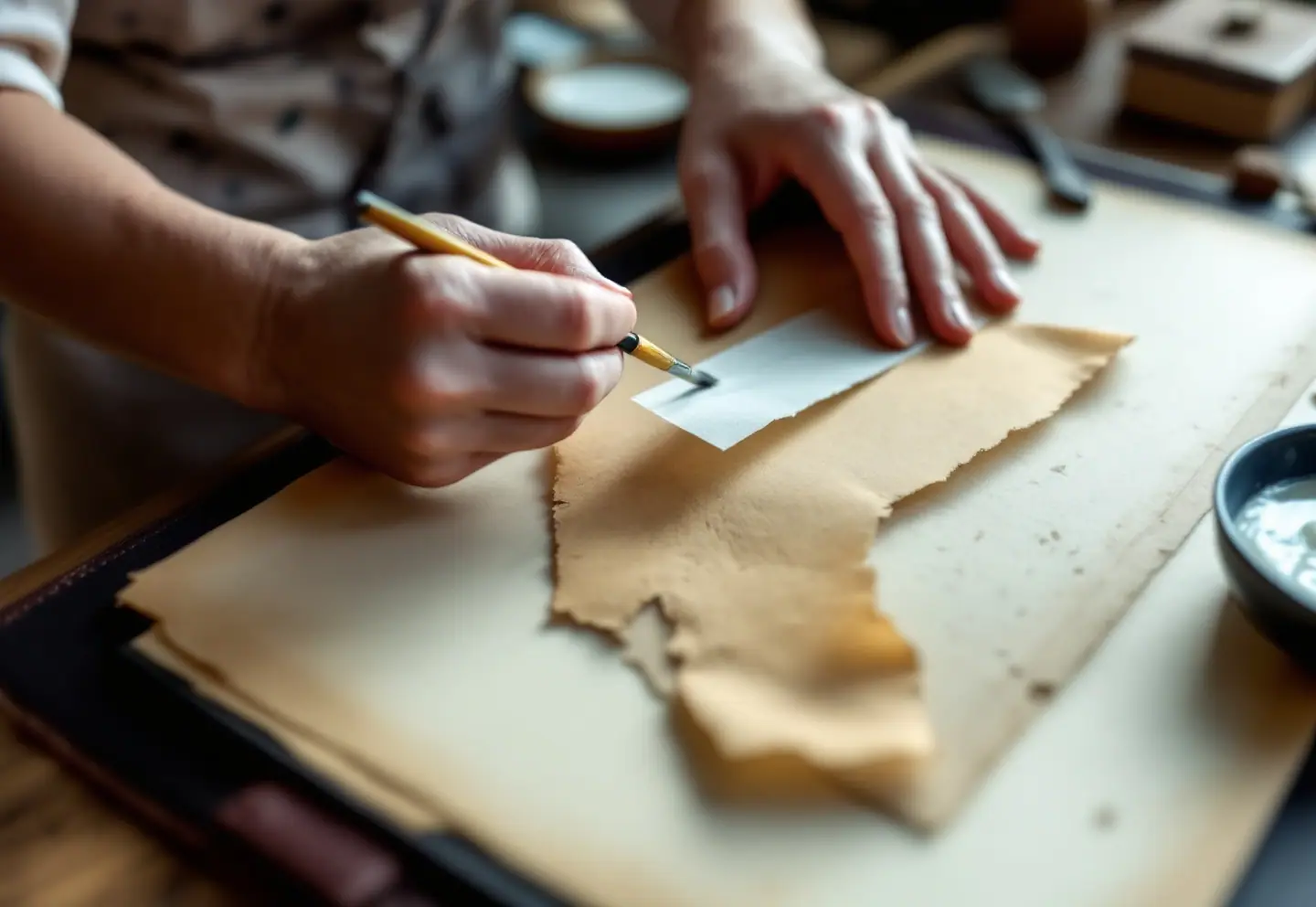
Suppose a run of forty land-record volumes arrives at a conservation bench. The leather is powdering, half the boards are off, someone in the 1960s fixed the worst tears with cellophane tape, and the first volume of the run was rebound years ago by a commercial bindery that oversewed the leaves so tightly the book won't open past forty degrees. Nothing about that description is unusual. What follows is the sequence of work such a run goes through, in the order it actually happens, with notes on why each step exists and where it can go wrong.
Why the original still matters
Records offices automated their indexes long ago, and many have scanned every page. People reasonably ask why the paper still deserves treatment. The answer is that title examiners, attorneys, surveyors and genealogists keep coming back to the original, and they are right to. The original carries information that copies routinely lose: faint pencil notes, an embossed notary seal that photographs as a smudge, a correction in a different ink, a watermark that dates the paper, the order in which leaves were sewn. When a copy is questioned, the original is what settles it. A conservator's job is to keep that evidence intact and usable, not to make the book look new.
The work, step by step
1. Survey and treatment proposal
Good work starts in the vault, not the lab. A conservator surveys the volumes on site, one at a time, noting binding structure, paper, inks, past repairs and how heavily each book is used. The survey also asks what has been done to the series before. If earlier volumes in a run were restored into post binders, the rest usually should match, so the shelf works as a set and users aren't confused. If some leaves were laminated decades ago, the proposal has to say whether that laminate stays or comes off.
The result is a written treatment proposal for each volume: condition, recommended steps, materials, and what the treatment won't achieve. You approve it before any work starts. A proposal that reads identically for every book is a warning sign.
2. Documentation
Before a thread is cut, the volume is photographed: covers, spine, representative openings, and every area of damage. The conservator collates the book, counting leaves, noting missing, misnumbered or blank pages, and recording the sewing structure. If leaves aren't numbered, they're foliated in soft pencil in a consistent corner so the order can never be lost. Original spine labels and title pieces are noted for reuse. Ink spot tests are recorded here too, because they decide what happens in step 6.
3. Disbinding
The volume is taken apart. Sewing threads are cut, old spine linings and animal glue are softened with a methyl cellulose poultice and scraped away, and the sections are separated. Oversewn volumes are the hardest: the binding machine punched a row of holes through the inner margin of every leaf, so each one will need a guard before it can be resewn. Disbinding sounds drastic. It's the only way to reach the folds and gutters where most damage hides. It also opens the best window for copying: once the leaves are cleaned and mended, and before they're sewn again, they can be scanned or filmed flat, without the pressure needed to capture a tight book.
4. Surface cleaning
Dirt is abrasive and, in a damp room, it feeds mold. Leaves are cleaned dry: a soft brush first, then a vulcanized rubber sponge, then grated vinyl eraser crumbs worked gently in circles and brushed off. The conservator cleans around pencil annotations, never over them, because in a records volume a marginal pencil note can be the most important line on the page. Leaves with mold residue are cleaned in a fume hood or biological safety cabinet, and the conservator wears a respirator.
5. Removing tape and old adhesives
Pressure-sensitive tape comes off in two stages. The carrier is lifted, usually with gentle heat from a heated spatula or with a solvent. Then the adhesive left behind is reduced with crepe rubber, a solvent applied by brush, or a poultice, often under a fume hood. Animal glue and gummed paper tape respond to controlled moisture; rubber cement has usually dried to a crumb and can be lifted mechanically. Old tape stain has often migrated deep into the fibers. It can be reduced, but promising complete removal is promising more than chemistry allows. Our article on removing old pressure-sensitive tape from records goes into the solvents and the risks.
6. Testing, washing and deacidification
Water is the most effective cleaner in paper conservation, and the most dangerous. Before any leaf goes near a bath, each ink, stamp and annotation is spot tested with a drop of water and, where relevant, ethanol under magnification. Iron gall writing ink is usually stable enough to wash but brings its own chemistry: the iron in it keeps catalyzing decay, and in some cases a specialist calcium phytate treatment is used to calm it. Our piece on iron gall ink corrosion covers that in detail. Purple copying inks, aniline dyes and many rubber-stamp inks bleed on contact. Leaves carrying them get no bath at all.
Leaves that pass go into shallow baths of filtered or deionized water, often adjusted slightly alkaline. The water draws out soluble acids and discoloration; the bath often turns tea-colored. A final alkaline bath, usually calcium hydroxide or magnesium bicarbonate, neutralizes remaining acid and deposits an alkaline reserve. Water-sensitive leaves are deacidified instead with non-aqueous magnesium compounds in a solvent carrier, brushed, sprayed or by immersion. Leaves are dried between blotters and felts under light, even weight so they come out flat.
A word on bleaching: on records, it's almost never appropriate. It weakens fibers, can alter inks, and the goal is legibility and stability, not whiteness.
7. Mending and filling
Tears are mended with strips of Japanese paper, usually long-fibered kozo, in a weight matched to the leaf, applied with wheat starch paste that has been cooked, cooled and strained. The tissue's edges are torn wet rather than cut, so the fibers feather into the sheet and the mend doesn't create a hard line that becomes the next tear. Losses are filled with toned paper matched in weight and texture. Many small losses, like insect damage, may be filled by leafcasting, where paper pulp is deposited into the gaps in a suction bath.
Leaves too weak to handle can be lined overall with a very thin tissue. That adds thickness, so it is used sparingly. For water-sensitive inks, the conservator uses remoistenable tissue: tissue precoated with adhesive, dried, then reactivated with a minimum of moisture or solvent. Folds that will be resewn get guards of Japanese paper so the thread passes through new, strong fiber.
8. Encapsulation
Single sheets, heavily used leaves and maps are often encapsulated: placed between two sheets of uncoated archival polyester film that are welded together around the edges with an ultrasonic or heat sealer. Nothing adheres to the document. It's protected from handling, dirt and fingers, and fully reversible: trim an edge and the sheet slides out. Encapsulated leaves can be bound into post binders on a hinged stub.
Two conditions apply. The paper should be deacidified first, so acid isn't trapped inside the envelope. And powdery or flaking media, such as pastel, charcoal or flaking ink, should not be encapsulated, because the static charge of polyester can lift particles off the page.
Lamination is never used. Fusing acetate film to paper with heat and pressure was common in the mid-twentieth century, and it is now one of the more laborious problems conservators are asked to reverse. If a vendor proposes laminating records, find another vendor.
9. Rebinding, post binders or boxes
How the volume goes back together depends on how it will be used.
- Sewn rebinding. Sections are resewn on linen thread over cloth tapes, with guards where needed, into new boards covered in book cloth or leather. Built properly, it opens flat and takes years of heavy use. Original spine labels can be reattached or kept with the book.
- Post binders. Leaves, encapsulated or hinged on stubs, are mounted on screw posts inside a hard cover. The volume opens flat, and leaves can be removed for imaging or future treatment without disbinding. Records offices like them for heavily searched series. They are heavy, though, and every leaf hinges at the same narrow strip, so the hinge material matters.
- Boxing. A volume whose original binding is significant, or which is too rarely used to justify rebinding, may simply get a custom drop-spine box that protects it from light, dust and handling.
10. The treatment report
Every volume should come back with a report: condition on arrival, every step taken, materials used, any change from the approved proposal, before-and-after photographs, and recommendations for storage and handling. Keep it with the series file. It's the first thing a future conservator will ask for.
Maps and oversized sheets
Maps and plats follow the same logic with different hazards. Many were mounted on cloth when they were made, some were varnished, and most have spent decades rolled or folded. They are humidified and flattened, cleaned, mended or lined, and then usually encapsulated and stored flat in map cases, in folders sized to the drawer. Cyanotype blueprints are the exception to several rules: they are sensitive to alkaline conditions, so they are not deacidified and should be stored in unbuffered enclosures. Diazo prints fade in light and are best kept dark.
What each treatment can and cannot do
| Treatment | What it fixes | What it cannot do |
|---|---|---|
| Surface cleaning | Removes abrasive grime, soot and loose mold residue; improves legibility | Lift stains that have soaked into the fibers |
| Tape and adhesive removal | Removes carriers and most adhesive; frees stuck pages; uncovers text | Guarantee the stain will fully disappear |
| Washing | Draws out soluble acids and discoloration; relaxes cockling | Be used on water-sensitive inks; restore lost strength |
| Deacidification | Neutralizes acid; leaves an alkaline reserve that slows future decay | Make brittle paper flexible again |
| Mending and filling | Closes tears and losses; makes leaves safe to turn | Recover text already lost from a hole |
| Lining | Supports leaves too weak to handle | Avoid adding bulk to the volume |
| Encapsulation | Protects single sheets and maps from handling; fully reversible | Stop acid decay in untreated paper; hold flaking media |
| Rebinding or post binder | Restores a volume that opens flat and can take heavy use | Bring back the original binding |
| Custom box | Protects from light, dust and shelf wear at low cost | Repair any existing damage |
When the records arrive wet
Water changes the order of everything. In brief: records that are wet but show no mold can be air-dried if the quantity is small enough to handle within about two days, interleaved, with fans moving air around the room rather than blowing on the paper. Anything more than that should be frozen to stop mold and buy time, then dried by vacuum freeze-drying, which is generally the safer choice for bound volumes and coated papers. Coated, glossy paper must be kept wet or frozen until it can be dried properly, because it fuses into a solid block if it partly dries.
If mold is present, isolate those items in a separate room or in sealed bags, keep them out of the vault, and have anyone handling them wear a respirator. Drying doesn't kill mold; it makes it dormant, and cleaning comes later. Our article on the first 48 hours after water reaches a records room sets out the decisions in order.
Reading the paper before you judge the damage
One last note on what to expect. The date on the spine says a great deal about how a book will behave on the bench. Paper made before about 1850 was usually made from linen and cotton rags. It tends to be strong and fairly stable, and its problems come mostly from ink, water and handling. Paper made after that is increasingly wood pulp, acidic from the start, and it is the paper that turns brown and snaps. A run of deed books often crosses that line partway through. That's why the earliest volume in a series can come back in better shape than one forty years younger, and why your budget for the later volumes should allow for more mending.