Making the Case: How to Win Preservation Funding, With a Half-Day Workshop for Clerks
 Dana WhitcombLast reviewed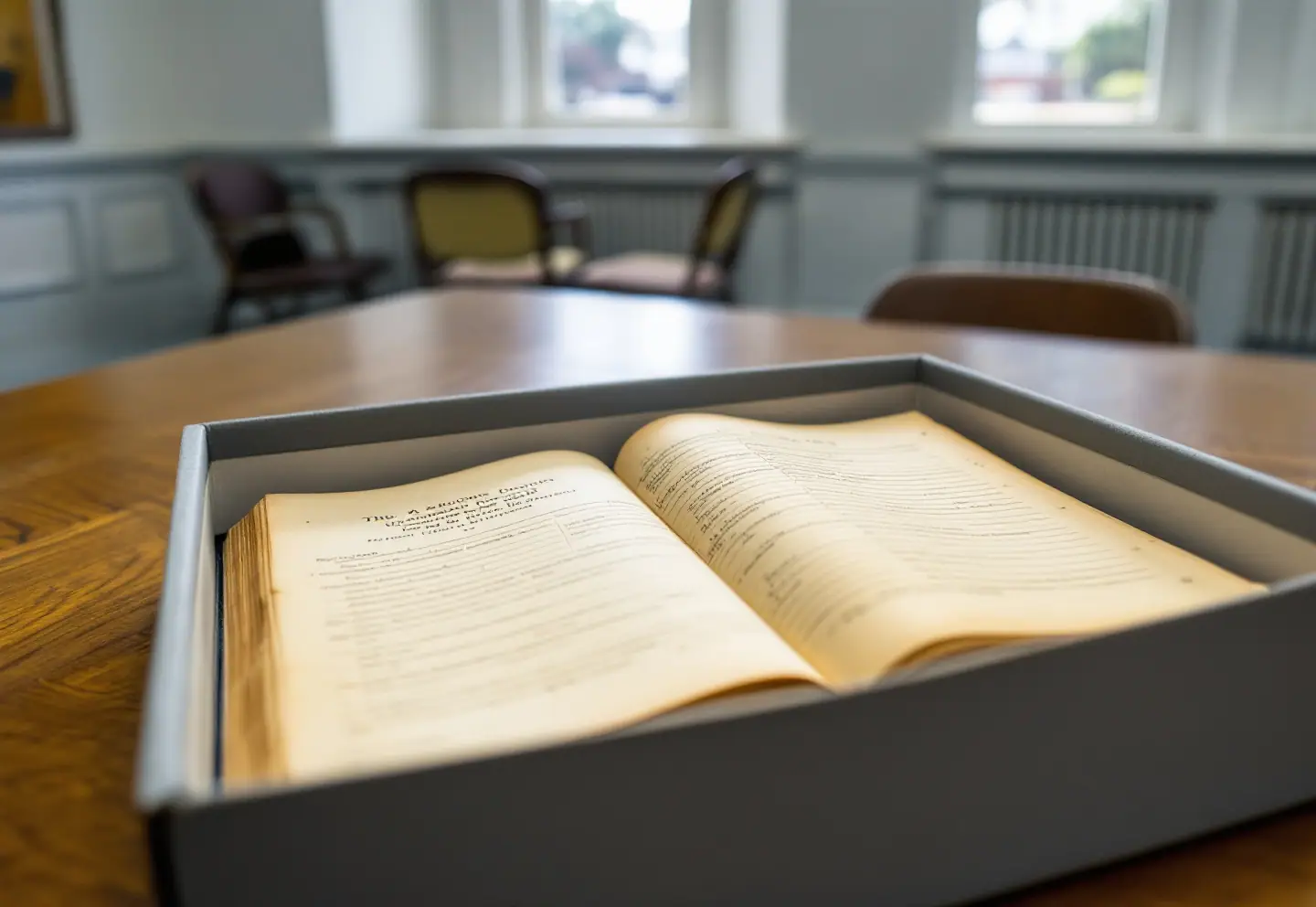
Every records custodian eventually learns the same lesson: the books will not fix themselves, and nobody else in town hall is going to ask for the money. Preservation requests rarely fail because a board decides old records don't matter. They fail because the request arrives late in the budget cycle, sounds like a luxury, and sits on the agenda next to a culvert replacement that a board member can see from the road. This guide is about changing those three things. The first half is the argument: what to ask for, how to frame it for a select board or county commission, how to fit it on one page, and how to answer the objections you will hear. The second half is a half-day workshop outline that a clerks' association, a regional planning commission or a group of neighboring towns can run for their own members, so the argument gets made in many offices at once instead of one.
Start with a plan, not a plea
Boards fund plans. Before you ask for anything, have a short written program you can hand across the table. It doesn't need to be elaborate. Four commitments cover most of it.
- Treat the originals properly. Damaged volumes and documents are repaired by accepted conservation methods, the kind a qualified conservator would recognize and could later undo, not with tape, household glue and a well-meaning volunteer. Our guide to conservation treatments for records, maps and volumes explains what that work involves.
- Make a preservation copy. For permanent records that means a copy made to a recognized standard: quality silver-gelatin microfilm, carefully made digital images with proper metadata, or both. A copy protects the content if the original is lost and spares the original from daily handling. See imaging and microfilm: making a preservation copy.
- Budget for the upkeep of digital material. Scanning is not a one-time cost. Digital files need storage, backup, format checks and periodic migration for as long as the records are kept, which for land and vital records means permanently. A program that pays for scanning but not upkeep is scheduling a future loss.
- Buy the best quality you can afford. Rebinding with the wrong adhesive, low-resolution scans, film that was never inspected: all of it has to be done again, and the second round usually costs more because the originals are in worse shape by then. Less work, done well, beats more work done poorly.
Put those four points on paper with your name and the date. It becomes the document you return to every budget season.
Why preservation is cheap, once you count the alternatives
"Preservation is inexpensive" sounds like a stretch until you list what happens when records aren't maintained. Losing a deed book is not a sentimental loss. It can mean title questions that end up in court, quiet-title actions, re-recording from whatever copies survive, and staff hours spent rebuilding chains of title from abstracts and the memories of local attorneys. Losing a run of vital records means residents who struggle to prove a birth, marriage or death for a passport, a pension or an estate. A burst pipe over unprotected volumes means emergency drying and freezing on short notice, at emergency prices, with no copy to fall back on.
Against that, a planned program is a modest, predictable line item. Don't put a dollar figure on a hypothetical disaster unless you have a real quote or a real local example to back it; boards can tell when a number has been invented. Describe the alternatives concretely and let the board do the arithmetic. If your office has had a near miss, such as a roof leak over the vault or a volume returned from a title searcher with pages loose, tell that story plainly. One true local incident is worth more than any national figure.
Framing it for the people who vote
Select boards and town meeting. In many New England towns the clerk's request goes through the select board and onto the warrant. A separate warrant article for records preservation can work better than a line buried in the clerk's operating budget: it gets its own discussion, and voters who care about local history will stand up and speak for it. Find out the deadline for submitting articles, which usually falls well before town meeting. Some towns keep a records-preservation reserve or capital fund; if yours doesn't, proposing one is a reasonable request on its own.
County commissions and councils. Here the request usually passes through a budget office first, so the written version carries more weight than your presentation. Commissioners respond to risk, liability and asset language. Recording offices in a number of states also have a dedicated funding stream, with part of each recording fee set aside by statute for preservation or technology. Know exactly what your state allows, and what balance is sitting in that account, before you ask for general-fund money.
Whichever body you face, three framings tend to land:
- Asset maintenance. The town or county maintains its roads, buildings and vehicles on a schedule. The records are the one thing it owns that is meant to last forever, and in many offices they have never received a dollar of maintenance. Framed that way, the request is ordinary stewardship rather than a new program.
- Legal duty. Public records statutes generally make the custodian responsible for keeping records safe and available. Quote your own state's language; it persuades better than any summary.
- Service to residents. Title searchers, surveyors, attorneys, genealogists and residents proving their own identity all depend on these books. If you track counter and research requests, bring a typical month's count.
The four-point pitch
When you get your few minutes on the agenda, four moves do most of the work.
Bring the worst volume. Choose the book with the detached boards, the brittle edges and the old tape stains. Bring it in a box, on a cart, and open it yourself. Don't pass it around the table; one more round of handling is the last thing it needs. Nothing you say will persuade as well as people seeing it with their own eyes.
Use the maintenance analogy. Say it in one breath: these records are the only permanent thing the town owns, and they have never been maintained. Nobody would run a fire truck for a century without servicing it.
Hand out short reading. Two or three pages at most: your one-page request, a page explaining what conservation treatment and preservation copying involve, and one well-chosen piece from a recognized source. The Northeast Document Conservation Center at nedcc.org publishes plain-language preservation leaflets that suit this purpose. Keep the packet short enough that people will read it.
Call the local paper. A photograph of the clerk with a two-hundred-year-old deed book is the kind of human-interest story that small papers and community radio actually want. Public attention makes the vote easier, and residents who read the story are often the ones who speak up at town meeting.
A one-page budget request
Keep it to one page. Board members will read one page.
| Section | What goes in it | Length |
|---|---|---|
| Title | "Records preservation request, fiscal year ___" and the total amount | One line |
| The problem | What is deteriorating and why it matters, in plain words | Two or three sentences |
| What we hold | Your own inventory: number of volumes, date range, condition counts (good, fair, poor) | A small table or three bullets |
| Proposed work | Exactly which volumes or series, what treatment, what kind of copy | Three to five bullets |
| Cost | Figures from written quotes, with the vendors' scopes attached separately | One line per item |
| Multi-year view | Where this request sits in a five- or ten-year plan | One sentence |
| If not funded | The specific risk of deferring these particular items | One or two sentences |
| Other money | Grants applied for, dedicated fees, reserve balances, matching funds | One or two lines |
For the multi-year line, our article on budgeting a records preservation program over ten years walks through a phased plan. Boards are far more willing to fund year one when they can see years two through ten laid out beside it.
Objections, and answers that hold up
"These books have lasted two hundred years without us spending a dime." They lasted because they sat on a shelf and were rarely used. Now they're consulted constantly, photocopied, carried to the counter and photographed by visitors with phones. Wear accumulates; it never resets.
"Just scan everything and throw the books away." Many states require permanent records to be kept in the original or on an approved preservation medium such as microfilm, and the rules on whether a digital copy alone can replace an original vary widely. Ask your state archives before anyone talks about discarding a volume. Scanning also doesn't repair a book that's falling apart; often the volume has to be stabilized before it can be scanned safely at all.
"Can't the historical society volunteers fix them?" Volunteers are invaluable for cleaning, rehousing and indexing. Repairs to bindings and documents are a different matter. Pressure-sensitive tape, household glue and lamination are behind much of the damage conservators spend their days undoing.
"Let's wait for a grant." Apply for grants. State archives programs, the National Historical Publications and Records Commission and private foundations all support records work. But grants usually require a local match and a written plan, and they rarely pay for routine maintenance. Local money is what makes grant money possible.
"Why is this quote twice the other one?" Compare scopes, not totals. Ask each vendor what adhesives and materials they use, what standard their imaging or film meets, how the volumes travel and are stored while away, and exactly what comes back to you. A lower price often means less work.
"Can we put it off a year?" You can. Explain what deferral means for the specific volumes on your list, and ask that the item be recorded in the minutes as deferred rather than dropped. Then bring it back at the next cycle.
A half-day workshop for clerks
Making this case alone, one office at a time, is hard going. A morning session hosted by a county or state clerks' association, a regional planning commission or a few neighboring towns lets clerks build their requests together and borrow each other's arguments. The outline below assumes 15 to 30 participants, one facilitator and one or two guest speakers: a conservator, someone from the state archives, and ideally a clerk who has already won funding.
| Time | Segment | What happens | Bring or hand out |
|---|---|---|---|
| 8:30–8:50 | Welcome and the stakes | Introductions; each clerk names the one series that worries them most | Sign-in sheet, name tags |
| 8:50–9:30 | What deterioration looks like | Conservator shows real examples: red rot, iron gall ink damage, old tape, water staining, broken sewing | Several sacrificial non-record volumes for handling |
| 9:30–10:10 | Treatment and copying in plain terms | What conservation treatment, rebinding, microfilm and digitization each do and don't do | One-page glossary |
| 10:10–10:25 | Break | – | – |
| 10:25–11:00 | Your legal footing | State archives speaker on custodial duties, retention, and rules for reformatting and preservation copies | Copies of the relevant statutes and rules |
| 11:00–11:35 | Counting what you have | A simple condition-survey method, practiced on the sample volumes | Survey form, pencils, nitrile gloves |
| 11:35–12:10 | Writing the one-page request | Each participant drafts their own request on the template above | Blank templates; laptops optional |
| 12:10–12:30 | Rehearsal | Pairs practice the four-point pitch while a partner plays the board and raises objections | Objections sheet |
Some practical notes for whoever organizes it:
- Use sacrificial books for handling. Never pass real permanent records around a training room. Discarded library books or volumes from a series that has already met its retention period show the same problems.
- Everyone leaves with a draft. The session has done its job if each clerk walks out with a one-page request filled in with their own numbers, ready to tidy and submit.
- Hold it ahead of budget season. A workshop held after warrants close or budgets are submitted turns into a history lesson. Schedule it early enough for the drafts to go in.
- Invite a board member or two. A selectperson or commissioner who has sat through the deterioration segment becomes an ally in the room where the vote happens.
- Collect the drafts afterward, with permission, and share the strongest ones (names removed) with the group. Next year's session starts from better examples.
The custodian's long view
The clerk who recorded a deed in 1840 and the surveyor who will need it a century from now will never meet. Both depend on whoever holds the book in between. That is the custodian's real job: guardian for people who aren't born yet, working on a budget set by people who also have potholes to patch every spring. Both facts deserve respect when you sit down in front of the board. Make the argument patiently, make it every year, and keep the worst volume in its box by the door, ready for the next meeting.