Storage Equipment and Supplies for Permanent Records: A Buyer's Guide
 Owen LachanceLast reviewed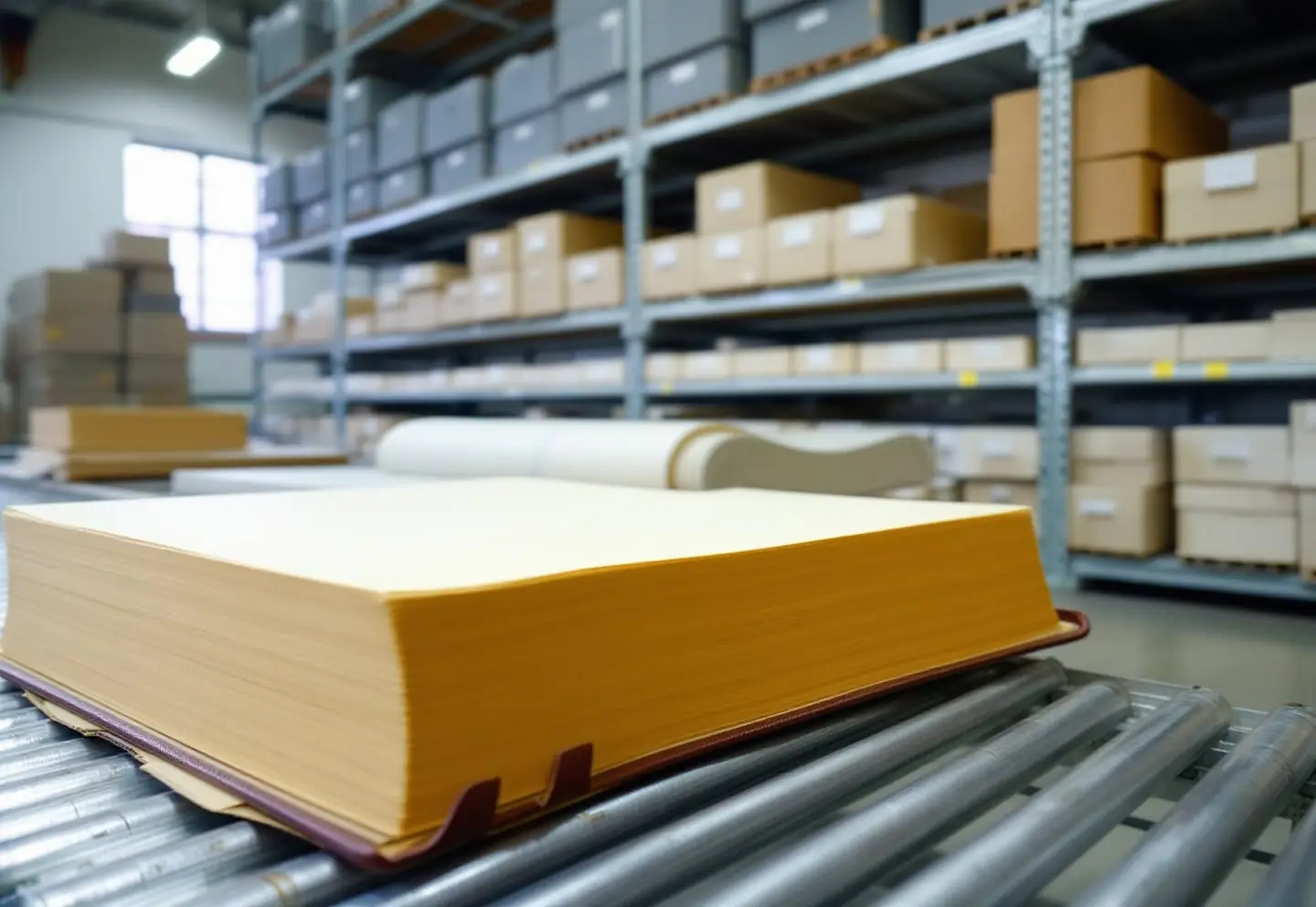
Walk into enough town vaults and you learn to read the shelving like tree rings. There's the oak shelf somebody's grandfather built, the steel units bought when the vault was enlarged, the cardboard cartons that arrived during a hurried move and never left. Each generation bought what it could, and the records show the results: deed books slumped sideways, plats folded to fit drawers too small for them, minutes in ring binders with every punched hole torn through. Storage equipment never makes the newspaper, but it decides whether the next century of handling is gentle or ruinous.
This guide covers what to look for when you buy for permanent records, the ones your retention schedule says to keep forever. It deliberately leaves out brand names and prices. Specifications outlast catalogs, and a supplier who can't answer the questions below is telling you something useful.
Buy for the collection you actually have
Before any catalog comes out, count. How many bound volumes, and in what sizes? How many are oversize land-record books too heavy for one person to lift comfortably? How many loose maps and plats, and how large is the largest? Are there photographs, film, ballots or boxes of loose papers? A simple tally by format and size heads off the classic mistakes: map drawers two inches too shallow, shelves spaced for letter-size boxes when half the collection is legal-size, cabinets chosen for the average plat instead of the biggest one.
Measure the room as well: floor area, ceiling height, door widths, sprinkler heads, and the route from the loading door to the vault. Big flat files and mobile shelving have a way of arriving at a doorway they can't pass through.
Binders and post binders
Recording offices that still bind recorded documents into books need sturdy binders, and the design details matter.
Post binders hold pages on heavy metal posts, closed by a locking bar or concealed screw mechanism so pages can't be added or removed without a key or tool. For recorded instruments that security is the whole point: a book whose pages can be quietly swapped is a book whose integrity can be challenged. Look for posts that extend as the book grows, a lock that will still work after decades of use, and covers of rigid board with a durable cloth or leather-like covering that won't flake. The hinge takes most of the strain, so ask how it's built and whether it can be repaired rather than replaced.
Pages for post binders should have a reinforced binding edge, either a strip of cloth or a heavier stock along the punched margin, because the holes are where pages fail. Unreinforced pages in a busy book tear at the posts within a few years.
Vital records binders follow the same logic in smaller formats. Whatever the size, keep permanent records out of three-ring binders: rings misalign, pages tear at the holes, and vinyl-covered binders give off harmful compounds as they age.
Hand-bound minute books, with sewn text blocks of permanent paper in proper bindings, are still the best home for minutes kept in bound form. A sewn book opens flat and outlasts any adhesive-bound one. If your board's minutes are printed and then bound, ask the binder whether the pages will be sewn, and on what paper.
Permanent paper and recording paper
Paper is the cheapest item on this list and the one most often gotten wrong. For anything kept permanently, buy paper that meets ANSI/NISO Z39.48, the American standard for permanence of paper, or its international counterpart ISO 9706. Compliant paper is alkaline, carries an alkaline reserve (usually calcium carbonate) to absorb acids over time, and is essentially free of lignin, the wood component that turns newsprint brown. Packaging for paper meeting Z39.48 often shows an infinity symbol inside a circle.
For ledger and recording paper that will be handled heavily, go further: a heavier weight, cotton fiber for strength and fold endurance, and a surface that holds the toner or ink your printers actually use. Ask for a sample and run it through your own machines. Toner that flakes off a slick surface is a permanence problem no paper standard can solve.
Polyester sleeves and encapsulation
Clear enclosures let people read a document without handling it. The plastic makes all the difference.
- Use uncoated polyester film (polyethylene terephthalate). It is clear, stiff and chemically stable, and it contains no plasticizers.
- Never use PVC, often sold simply as "vinyl." Its plasticizers migrate out over time and it can release acidic compounds as it breaks down. If a sleeve smells like a new shower curtain, keep it away from records.
- Polypropylene and polyethylene are acceptable for many sleeves and cost less, though they are less clear and less rigid than polyester.
Encapsulation seals a sheet between two layers of polyester without attaching anything to the paper. The better envelopes are closed by ultrasonic or radio-frequency welding along the edges, so no adhesive sits inside the package. If double-sided tape is used instead, it should sit well back from the document's edges.
Two cautions. Polyester holds a static charge, which makes it wrong for anything with loose or flaking media: pastel, charcoal, soft pencil, or the flaking paint on a hand-colored map. And sealing acidic paper in a closed envelope can keep its own acids concentrated around it; conservators often recommend deacidifying first or leaving a corner open. If the item matters, ask a conservator before you seal it. Our guide to conservation treatments for records, maps and volumes explains when that kind of work is worth paying for.
Maps and plats
Oversize sheets are the hardest records to store well, and the two main approaches suit different situations.
Flat files, steel map cases with wide, shallow drawers, are the conservator's default. Sheets lie flat and are supported across their whole area. Look for full-extension drawers that run smoothly, rear hoods or dust covers that stop sheets sliding over the back of the drawer, and enough depth to hold folders without crowding. Keep sheets in folders, a few to each, and never fill a drawer to the top. The sheet at the bottom of an overstuffed drawer is the one that tears when someone digs.
Hanging plat systems store sheets vertically in cabinets, each sheet carried by a strip along its top edge or housed in a lightweight hanging envelope. Recorders like them because plats are easy to browse and pull, and the cabinets use less floor space than map cases. They suit sheets in sound condition that are consulted often. They're a poor choice for brittle, torn or heavily creased sheets, which shouldn't hang from their own weight, and the hanging strip must never be glued to an original. Hanging envelopes of polyester or lightweight archival paper with a reinforced top edge are the safer route.
Sheets too large for any drawer can be rolled, image side out, around a large-diameter archival tube, wrapped and stored horizontally. Treat rolling as a last resort, and only for paper that is still flexible.
Shelving
Static steel shelving with a baked or powder-coated finish is the standard for boxes and ordinary volumes. Avoid raw wood and particleboard, which give off acids; if you must keep wooden shelving, seal it and line it with a barrier board. Keep the bottom shelf several inches off the floor (four to six is a common target) so a little water on the floor doesn't reach the records, and leave whatever clearance your fire code requires below sprinkler heads. If water does get in, our article on the first 48 hours after water reaches a records room covers what to do next.
Roller shelving for oversize volumes. Heavy land-record and deed books should lie flat. Stored upright, a big text block sags under its own weight, pulls away from its spine and distorts the binding: the slumping you see in so many vaults. Roller shelves give each volume a bed of rollers or a sliding tray, so it can be drawn out without dragging its cover across steel. One volume per level, or at most a short stack, keeps the books accessible without heavy lifting.
Mobile or compact shelving mounts shelving units on carriages that move along rails, closing up most of the aisles. It can greatly increase what a room holds, but it concentrates a lot of weight on a small footprint. Before you order, have a structural engineer confirm that the floor can carry the system fully loaded. That is not a question for the salesperson. Also ask about anti-tip design, aisle safety locks, and whether the system is manual, mechanically assisted or powered.
Boxes and folders
Look for acid-free, lignin-free board, then choose between buffered and unbuffered stock. Buffered board contains an alkaline reserve that neutralizes acids, which suits most paper records. Unbuffered board is preferred for certain photographic processes, blueprints, and protein-based materials such as silk, wool and leather, which alkalinity can harm.
For photographs of any kind, choose enclosures that have passed the Photographic Activity Test (PAT), standardized as ISO 18916. Paper that is merely labeled "acid-free" hasn't necessarily been tested against photographic materials. Ask for the PAT result in writing.
Match the box to the job: lidded record cartons for semi-active files, flip-top document cases for loose permanent papers, drop-spine or custom-fitted boxes for fragile volumes. Fill boxes properly, not so full that folders bulge and not so empty that they slump. Spacer boards fix both.
Labels and inks
Write on folders in soft pencil. Use pigment-based archival pens on box labels and enclosures, and never write on the record itself. Self-adhesive labels belong on boxes, not documents, and should use a stable acrylic adhesive. ISO 11798 sets permanence requirements for writing, printing and copying on paper, and it's a fair thing to ask about for the printers and inks that produce your permanent records. Throw out rubber bands, sticky notes and rusty clips wherever you find them.
Vaults and fire-rated rooms
Vault doors and fire-rated rooms are rated by how long they resist a standard test fire, usually expressed in hours. Record-protection containers carry separate classes for paper and for film or magnetic media, because those materials fail at far lower temperatures than paper does. The NFPA 232 standard on the protection of records is worth reading before you meet an architect. Remember that a rating describes a test, not a promise about any particular fire, and that the climate inside the vault matters as much as its fire resistance. Our article on environmental monitoring for a records vault covers that side.
Voting booths and ballot boxes
Election equipment still passes through many clerks' hands. Ballots and election records have their own retention rules: federal law requires records of federal elections to be kept for 22 months, and states add their own requirements. Use sealed, tamper-evident containers with numbered seals, log every opening, and store them where the chain of custody is easy to demonstrate.
Quick reference
| Material | What to look for | What to avoid |
|---|---|---|
| Post binders | Extendable metal posts, locking bar, rigid covered boards, repairable hinge | Ring binders, vinyl covers, flimsy locks |
| Binder pages | Reinforced punched edge, permanent paper | Unreinforced pages in heavily used books |
| Paper | ANSI/NISO Z39.48 or ISO 9706; cotton content for ledgers | Unspecified office or recycled stock with no permanence claim |
| Clear sleeves | Uncoated polyester; welded seams for encapsulation | PVC or vinyl, coated films, tape near the document |
| Map and plat storage | Flat files with rear hoods and folders; hanging envelopes for sound sheets | Overfilled drawers, adhesive strips on originals, folding |
| Shelving | Powder-coated steel; roller shelves for oversize volumes; engineer-checked mobile systems | Raw wood, upright storage of heavy volumes, bottom shelf at floor level |
| Boxes and folders | Lignin-free; buffered or unbuffered as appropriate; PAT-passed for photographs | "Acid-free" claims with no specification behind them |
| Labels and inks | Pencil on folders, pigment ink on enclosures, acrylic adhesives | Labels or ink on the record, rubber bands, sticky notes |
| Vault space | Tested fire rating, separate protection for media, climate control | Ratings nobody can document, records stored on the floor |
When in doubt, ask for three things: the specification sheet, the test reports and a sample. A supplier who regularly sells to archives will have all three ready.