Fireproof Safes for Documents: Chests, File Boxes, Bags and What the Ratings Mean
 Margaret Thibodeau11 min read
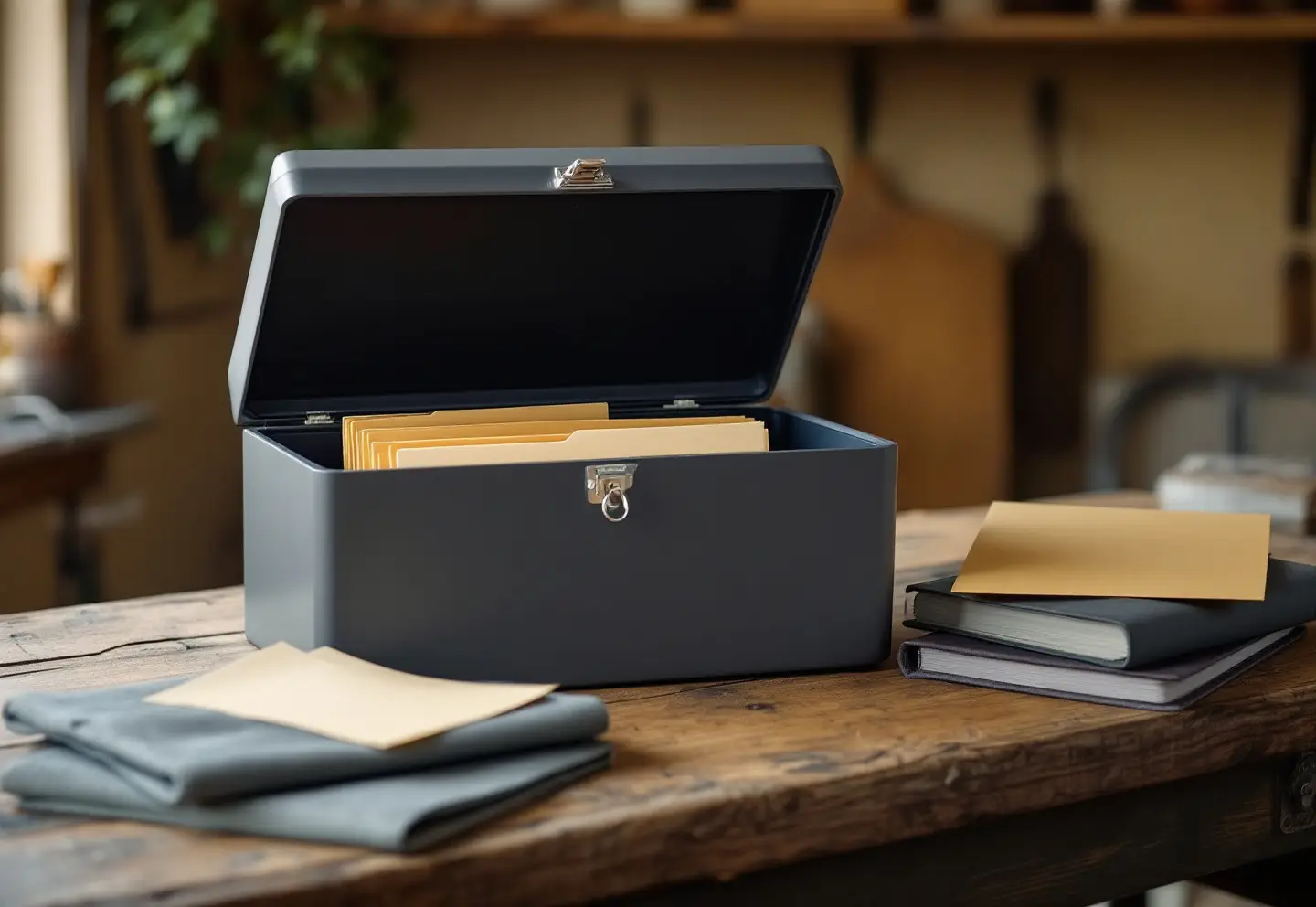
A fireproof safe for documents should carry a UL 72 Class 350 rating, or a third-party verification to the same test, for at least 30 minutes, and an hour is better. That rating means the inside stays below 350 °F long enough for paper to come out readable. It does not mean your USB drives, photographs or negatives will survive, because those need a Class 125 or Class 150 container. Add a water rating if the safe lives in a basement, bolt it down if it is small enough to carry, and keep a few things in a bank box instead.
Archivist’s picks
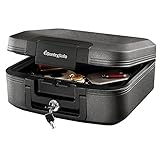 For: certificates and deeds
SentrySafe fire and water resistant chest
A small key-locking chest for passports, deeds and certificates.
$62.99 Price checked at Amazon Oct 20, 2026, 12:24 AM ET
Get it on Amazon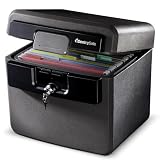 For: hanging files
SentrySafe fire resistant file box
A key-locking box that takes hanging file folders.
$68.00 Price checked at Amazon Oct 20, 2026, 12:24 AM ET
Get it on Amazon For: a home office
SentrySafe 1.2 cu ft one-hour safe
A floor safe with a digital keypad for a home office.
$286.99 Price checked at Amazon Oct 20, 2026, 12:24 AM ET
Get it on Amazon
Product prices and availability are accurate as of the date/time indicated and are subject to change.
Who needs one, and for what
Nothing is fireproof. Everything sold under that word is fire-resistant for a stated time under stated conditions, and the industry knows it, which is why the labels say "fire-resistant" and the search box says "fireproof." I spent many years working beside a records vault, a fire-resistant room built for permanent public records. A household or a small office gets a box instead, and a box is a much smaller promise. Treat it as one.
A home fire safe or chest does three jobs well:
- It keeps the papers you would need in the week after a fire readable: passports, insurance policies, certified copies of vital records, account lists.
- It gives you a single thing to grab when you have a few minutes to leave.
- It slows down a casual thief, a curious child or a visiting relative who likes to read other people's mail.
It is not a burglary safe unless it carries a separate burglary rating, and most chests do not. It is not a good home for photographs, film or electronics, for reasons explained below. And it is not an archive: the inside of a closed fire box can run damp. Government offices storing permanent records need real vault equipment; the storage equipment guide for permanent records covers that end of the scale.
What the ratings actually say
UL 72 and its classes
UL 72 is the standard test for fire resistance of record protection equipment. The safe goes into a furnace that follows a standard time and temperature curve, which puts the outside at roughly 1,550 °F by the 30 minute mark and roughly 1,700 °F at one hour. The class tells you how hot the inside was allowed to get; the time tells you how long it held.
| Class | Inside must stay below | Made for |
|---|---|---|
| 350 | 350 °F | Paper documents |
| 150 | 150 °F and 85 % RH | Magnetic tape and photographic film |
| 125 | 125 °F and 80 % RH | Digital media: disks, flash drives, hard drives |
Durations run from a half hour up to several hours. The standard also includes an explosion test, in which the safe goes into a furnace that is already hot to see whether trapped moisture blows it apart, and a fire and impact test, in which the hot safe is dropped onto rubble and then heated again. A rating names which tests the model passed. "Class 350, 1 hour" without the impact test is a perfectly good chest for a ground floor and a weaker choice for a second-story bedroom closet that may end up in the basement.
ETL verified and other labels
Many chests and safes carry an ETL Verified mark from Intertek instead of a UL classification. ETL verification means a third-party lab confirmed the maker's claim, and that claim is usually written to UL 72 conditions: "verified to protect paper for 30 minutes up to 1,550 °F," for example. Read the exact words. A verification can cover fire alone, water alone or both, and the paper and digital media claims are separate lines.
A product that says "fire-resistant" with no lab mark is reporting its own test, which you cannot compare with anything.
30 minutes or 1 hour
The rating is time inside a furnace on a fixed curve, not time in your house. A safe often sits in smoldering debris long after the flames are out, still taking heat.
My own rule: 30 minutes is the floor for a chest in a town with a staffed fire station close by. Buy an hour if you are rural and served by a volunteer department, if the house is wood frame, or if the safe will sit anywhere above the ground floor. Margin is cheap compared with replacing three passports, two birth certificates and an insurance policy in the same week.
Why paper survives at 350 °F and a USB drive does not
Paper does not begin to char until it gets past roughly 400 °F, so 350 °F leaves a margin, and that is why it became the line for documents. Plastics, magnetic coatings, flash memory and photographic gelatin fail at far lower temperatures.
There is a second problem that surprises people. Most fire-resistant safes are insulated with a material that holds water chemically and releases it as steam when heated. That steam is how the inside stays cool, and it also means the inside of a Class 350 box in a fire is hot and wet. Paper tolerates a short sauna. Photographs stick to each other, negatives fuse, and electronics do what electronics do when steamed. Class 125 and Class 150 containers add insulation and seals to hold both temperature and humidity down.
You have two sensible answers. Put a small media chest rated Class 125 inside a larger paper-rated safe, or keep your digital copies somewhere else entirely: a drive at a relative's house, a bank box, an online service. For family photos, the better protection is a scan stored in two places; how to digitize old photos walks through resolution, file types and backup copies.
Water resistance
Fires are put out with a great deal of water, and the basement collects whatever runs down. A safe that survives the fire and then soaks for two days has not saved much.
Water ratings come in two flavors: resistance to spray, which stands in for a fire hose, and submersion to a stated depth for a stated time. For a basement, insist on a submersion rating. For an upper floor, spray resistance is the minimum. If papers do come out wet, Water in the records room: the first 48 hours covers what to do before mold starts.
What matters in the specs
| Feature | Why it matters | What to look for |
|---|---|---|
| Fire rating | Decides whether paper comes out readable | UL 72 Class 350 or ETL verified to the same conditions; 30 minutes minimum, 1 hour preferred |
| Media rating | Paper ratings do not protect drives, discs, photos or film | Class 125 for digital media, Class 150 for film and tape, or a rated media chest inside the safe |
| Water rating | Firefighting water and basement flooding | Stated submersion depth and time for basements; spray rating at least elsewhere |
| Impact test | Upper-floor safes can fall through a burned floor | "Fire and impact" on the label for anything above the ground floor |
| Interior size | Folders bent to fit get damaged and are annoying to use | Measure your folders; letter or legal hanging-file rails if you file that way |
| Lock | Keeps out the curious, not the determined | Key or keypad; for keypads, battery access from outside and an override key |
| Anchor holes | Small chests walk out under one arm | Factory bolt-down holes and a kit that keeps the water seal intact |
| Weight and handle | Heavy deters theft; light is easier to grab | A bag or chest for grab-and-go, a heavier safe for staying put |
| Room for a desiccant | The inside can run damp in humid months | Enough space for a silica gel pack beside the papers |
Chest, file box, safe or bag
A fire chest is a small top-opening box with a carry handle and a latch or key lock. It holds passports, a short stack of documents and a flash drive, and it is the easiest to carry out the door. Most are rated for paper at 30 minutes.
A fire file box is the same idea sized for hanging letter-size files, for the household or small-business papers you actually open during the year.
A fire safe with a digital lock opens from the front, weighs much more, often carries a one hour rating and comes with shelves and anchor holes. It suits a home office or a small business that keeps contracts, minute books and backup drives on site.
A fire-resistant document bag is a zippered pouch of coated fiberglass. It is light, folds into a go-bag and stops sparks, smoke and brief heat. Most are not tested to UL 72; their temperature claims are the maker's own. Use one as a second layer inside a safe, or as the bag you grab on the way out, not as your only protection.
Archivist’s kit
SentrySafe fire and water resistant chest
A small key-locking chest for passports, deeds and certificates.
- UL classified for 30 minutes at 1,550 °F
- ETL verified for 72 hours under water
- Carry handle
$62.99 Price checked at Amazon Oct 20, 2026, 12:24 AM ET
Get it on AmazonSentrySafe fire resistant file box
A key-locking box that takes hanging file folders.
- UL classified for 30 minutes of fire
- ETL verified water resistance
- Holds hanging files up to 12 in wide
$68.00 Price checked at Amazon Oct 20, 2026, 12:24 AM ET
Get it on AmazonSentrySafe 1.2 cu ft one-hour safe
A floor safe with a digital keypad for a home office.
- UL classified for 1 hour at 1,700 °F
- ETL verified for 24 hours in 8 in of water
- Digital keypad plus backup key
$286.99 Price checked at Amazon Oct 20, 2026, 12:24 AM ET
Get it on Amazon
Two-pocket fire resistant document bag
A zippered pouch for papers you want to grab and go.
- Two zippered pockets
- 15 x 11 in
- Reflective strip
$15.99 Price checked at Amazon Oct 20, 2026, 12:25 AM ET
Get it on Amazon
Product prices and availability are accurate as of the date/time indicated and are subject to change.
Picked from maker specifications and published reviews. We have not bench-tested these units.
Setting it up
Where to put it
Lower floors beat upper ones, and the attic is the worst place in the house. A basement keeps the safe away from the hottest part of a fire but puts it where the water ends up, so it needs a submersion rating.
Bolting it down
A small fire chest is a convenience for a thief: the valuables are already packed. Bolt anything one person can carry to the floor through the maker's anchor holes, into concrete with expansion anchors or into a joist. Before you drill, read the manual. Some makers say that bolting down voids the water rating unless you use their sealing kit, and it is better to learn that from the manual than from a puddle.
Keeping the inside dry
The same insulation that steams in a fire can keep the inside slightly humid the rest of the year. Put a small silica gel pack inside, recharge or replace it on a schedule, and open the safe every month or two so you notice a musty smell early. Keep papers in folders rather than loose, and photos in sleeves if they must live there at all.
Keys and codes
Keep the spare key and the override key somewhere other than the safe, and somewhere other than the hook beside it. Every locksmith has met the person who locked the override key inside. Write the combination down in a place a family member could find if you could not.
What to keep inside, and what belongs in a bank box
A home safe is for things you might need on short notice or in the days after a disaster:
- Passports and Social Security cards
- Insurance policies and a contact sheet for your agent
- A home inventory, as photos on a drive inside a Class 125 container
- Copies of wills, powers of attorney and health care directives, the ones you can hand to a hospital
- Certified copies of birth, marriage and death certificates
- A list of financial accounts and the people to call, some cash and spare keys
A safe deposit box is for things you rarely need in a hurry and could not easily replace, or that are worth stealing: paper savings bonds and stock certificates, coins and jewelry, original family papers such as naturalization records or old letters, and a second copy of your backup drive. Two cautions. Safe deposit box contents are not covered by FDIC insurance, so check what your homeowner's or renter's policy says. And ask your attorney where the original will should live, because a bank box can be slow to open after a death in some states.
A word from my years behind a recorder's counter: once your deed is recorded, the town or county recording office holds the official record, and a certified copy is a request form away. The paper deed in your drawer is worth keeping, but it is not irreplaceable, and it does not need the best spot in the safe. Neither does a decade of bank statements. Before you fill a safe, sort out what you are required to keep at all with the records retention calculator. Most home safes I have seen are half full of paper that could have been shredded years ago.
Workbench shortlist
- 1Get it on Amazon
SentrySafe fire and water resistant chest
For: certificates and deeds$62.99 Price checked at Amazon Oct 20, 2026, 12:24 AM ET
- 2Get it on Amazon
SentrySafe fire resistant file box
For: hanging files$68.00 Price checked at Amazon Oct 20, 2026, 12:24 AM ET
- 3Get it on Amazon
SentrySafe 1.2 cu ft one-hour safe
For: a home office$286.99 Price checked at Amazon Oct 20, 2026, 12:24 AM ET
Product prices and availability are accurate as of the date/time indicated and are subject to change.
Run the numbers first: How long to keep records.
Frequently asked questions
Is any safe actually fireproof?
No. Every safe is fire-resistant for a rated time under test conditions. Look for the class and the duration, such as UL 72 Class 350 for one hour, rather than the word "fireproof."
What does UL Class 350 mean?
The inside of the safe stayed below 350 °F for the rated time in a standard furnace test. That protects paper. It does not protect photographs, film or digital media.
Can I keep USB drives and photos in a fireproof document safe?
Only with extra protection. Paper-rated safes run hot and steamy inside during a fire. Use a Class 125 media chest inside the safe for drives, and keep a second copy of scans somewhere else.
Is a 30 minute fire rating enough?
For a ground-floor chest in a town with a nearby fire station, usually. For rural homes, wood-frame houses or anything above the ground floor, buy a one hour rating.
Are fireproof document bags worth it?
As a light grab-and-go bag or a second layer inside a safe, yes. Most are not tested to UL 72, so do not rely on a bag alone for papers you cannot replace.
Should I bolt down a small fireproof safe?
Yes. If you can lift it, so can a thief. Use the maker's anchor holes and check whether bolting affects the water rating.
Keep reading
Environmental Monitoring for a Records Vault: Loggers, Targets and Reading the Graph
A practical checklist for monitoring temperature and humidity in a records vault, with logger placement, dehumidifier advice and how to read the logger graph.
Email Is a Record Too: Capturing and Keeping Official Email
A model policy memo for official email: when a message is a record, retention by role, personal accounts and texts, records requests, legal holds and export.
Budgeting a Records Preservation Program Over Ten Years
Phasing a records preservation program over a decade: condition survey, priority scoring, annual tranches, recording-fee funds, grants and board reports.