Hygrometers for Records and Photo Storage: Which Kind to Buy and Where to Put It
 Margaret Thibodeau10 min read
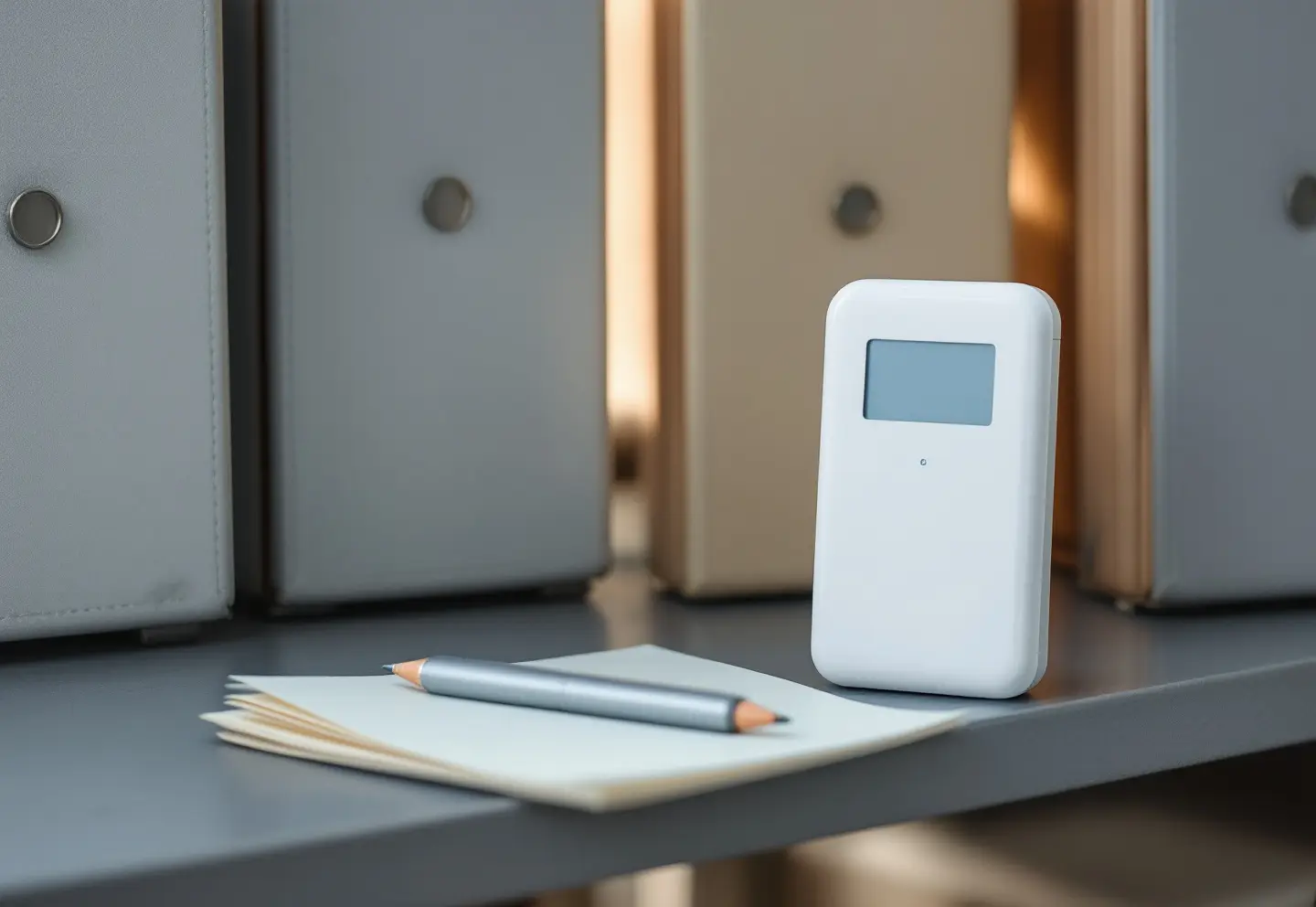
For a closet, cabinet or single records room, a plain digital hygrometer that also shows temperature (sold as a thermo hygrometer) and keeps the high and low readings is enough to tell you whether the paper is safe. If the space sits empty at night and over weekends, add a logging hygrometer: one that sends readings and alerts to your phone, or a pocket logger you leave on the shelf for weeks and read out as a PDF report. Expect any of them to read within about 2 to 5 percent of the true relative humidity, check each one with a salt test once a year, and set it at shelf height among the records, away from outside walls and vents. The number you want for paper and photographs is a steady 30 to 50 percent.
Archivist’s picks
 For: a shelf
ThermoPro TP50 hygrometer
A simple digital thermometer and humidity gauge for a shelf.
Get it on Amazon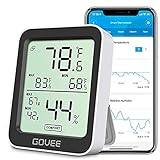 For: phone alerts
Govee H5075 Bluetooth hygrometer
Logs temperature and humidity to a phone app and alerts out-of-range readings.
Get it on Amazon For: a PDF report
Elitech RC-51H data logger
A pen-sized logger that records temperature and humidity for weeks and saves a PDF report.
Get it on Amazon
What a hygrometer measures
A hygrometer measures relative humidity: how much water vapor the air holds compared with the most it could hold at that temperature. Cool a room and its relative humidity rises, though not a drop of water came in; warm it and the reading falls. A humidity reading without a temperature beside it is only half a reading, which is why nearly every digital hygrometer now shows both.
Paper takes up moisture from the air and gives it back, so the water in a deed book follows the relative humidity on its shelf. When you are hunting for the source of damp, the better number is dew point, which tracks the actual amount of water in the air. A thermo hygrometer gives you the two readings you need, and the dew point calculator does the arithmetic, including how damp the same air gets against a cold foundation wall.
Digital hygrometers, with a small electronic sensor, are what most people buy, and the better ones are accurate enough for records work. Dial hygrometers move a needle with a hair element or a coiled strip, and the decorative ones sold for wine racks are often far off. Sling psychrometers, with a wet and a dry thermometer, are a reference method for checking other instruments.
How accurate is a digital hygrometer?
Most consumer digital hygrometers state an accuracy between plus or minus 2 and plus or minus 5 percent relative humidity, usually for the middle of the range rather than the very dry or very damp ends. Two meters on the same shelf can disagree by four points and both be within their specifications.
That is less alarming than it sounds: the target band is twenty points wide. What matters more:
- Drift. Sensors lose accuracy with age, faster after long spells in very damp air.
- Consistency. If you own several, check them against each other so one room can be compared with another.
- Trend. A meter that reads three points high still shows you a ten-point rise over a week.
- Settling time. A hygrometer carried from a warm office into a cool basement needs about an hour to catch up.
Checking one with the salt test
Air sealed over a damp mass of ordinary salt settles close to 75 percent relative humidity at normal room temperatures, which makes table salt the simplest calibration check there is.
- Put a spoonful of table salt in a bottle cap or small dish.
- Add water a few drops at a time until it looks like wet sand. Some salt must stay undissolved; a clear solution will not work.
- Seal the dish and the hygrometer in a zip-top bag or food container, with the salt not touching the meter.
- Leave it overnight at a steady temperature, out of the sun and away from a radiator.
- Read the meter through the bag. The difference between its reading and 75 is its error.
- Write the correction and the date on a strip of tape on the back. Some models and apps let you enter an offset; for the rest, do the sum in your head.
The test checks one point, while you will mostly be reading in the 40s, so treat the correction as a good guide rather than a certificate. Magnesium chloride gives a second point near 33 percent, and two-point calibration kits are sold if you want to go further. A meter more than about five points off, or one that gives a different answer each time, should be retired.
Where to put a hygrometer
Measure where the records are. A meter on the desk by the door tells you about the desk.
- Shelf height, inside the stacks, on a middle shelf near the middle of the room.
- Away from outside walls, windows and doors, which run cooler or warmer than the room.
- Away from vents, radiators, lights and the dehumidifier's exhaust. Moving air can swing a reading several points.
- Out of direct sun, which warms the sensor and lowers the reading.
- On a bottom shelf by the foundation wall as a second reading in a basement. Cool, damp air settles there, and the lowest boxes grow mold first.
- Inside any closed space you care about: a fire safe, a photo cabinet, a closet of family papers. Fire safes can run damp inside, as our guide to fireproof safes for documents explains.
- Where you will see it. Half the value of a shelf display is the glance you give it walking past.
In the county vault where I worked, the gauge by the door read comfortably for years. The first logger we left on a bottom shelf by the foundation wall told another story, and we moved the oldest volumes.
How many hygrometers a room needs
One per room is the minimum, plus one in each enclosed space inside it. Add meters where the room is not uniform: an L-shaped room, one outside wall, a corner that smells faintly musty. A reference reading in the hallway or upstairs tells you whether a rise comes from the building or the weather.
| Space | How many | Which kind |
|---|---|---|
| Closet or cabinet of family papers and photos | One inside, one in the room outside it | Shelf displays |
| Single records room or storeroom | One mid-room at shelf height | A shelf display, or a phone-connected logger if the room sits empty for days |
| Basement records room or vault | One mid-stacks, one on a bottom shelf by the outside wall, one reference outside | Loggers, plus a display by the door for quick checks |
| Fire safe or chest | One inside | A small logger or a display that fits |
| Rented storage unit | One inside, left for a season | A standalone logger that saves a report |
Display, logger or phone alerts
A display answers "what is it right now?" A logger answers "what happened while I was away?" Alerts answer "should I go in tonight?"
| Type | What you get | Best for | Watch out for |
|---|---|---|---|
| Shelf display | Current reading plus highs and lows | Rooms you visit every day or two | No history |
| Phone-connected logger | History, export and alerts in an app | Rooms empty overnight and on weekends | Bluetooth reaches only so far |
| Standalone data logger | Weeks of readings saved as a report | Closed boxes, safes, storage units, repair requests | No live alerts |
Bluetooth alerts reach the phone in your pocket upstairs, not the one you left at home. For a building that sits empty, choose an instrument that connects through Wi-Fi or a hub. And a standalone logger is the evidence-maker: a selectboard that shrugs at "it feels damp down there" sits up when handed four weeks of dated readings above 65 percent.
The picks, by job
These three cover most rooms. The shelf hygrometer, with a stated accuracy of about plus or minus 2 to 3 percent and a high and low readout, belongs beside every box of papers you care about. The Bluetooth hygrometer keeps a history on your phone, exports it and alerts you when readings leave the range you set. The pen-sized logger records temperature and humidity for weeks in an IP65-rated case, then hands you a PDF report without any software. The Archivist's kit lists them with the other supplies a records room needs.
Archivist’s kit
ThermoPro TP50 hygrometer
A simple digital thermometer and humidity gauge for a shelf.
- Stated accuracy about ±2 to 3 % RH
- Shows highs and lows
- Battery powered
Govee H5075 Bluetooth hygrometer
Logs temperature and humidity to a phone app and alerts out-of-range readings.
- Bluetooth app with history and export
- Alerts when readings leave your range
- Large display
Elitech RC-51H data logger
A pen-sized logger that records temperature and humidity for weeks and saves a PDF report.
- Temperature and humidity logging
- PDF report without software
- IP65 rated case
Picked from maker specifications and published reviews. We have not bench-tested these units.
What the readings mean for paper and photographs
Common guidance for paper and photographs is 30 to 50 percent, held steady. Paper, cloth, leather, adhesive and photographic gelatin swell and shrink as moisture changes, at different rates, so a room that lurches from 35 to 55 every few days does more harm than one that sits at 52 all season.
| Reading | What it means | What to do |
|---|---|---|
| Below 30 % | Dry; paper and leather get brittle, photographs curl | Remove desiccant or turn the dehumidifier down |
| 30 to 50 % | The usual target | Keep it steady and keep logging |
| 50 to 60 % | Getting damp; fine for short spells | Watch the trend and find out why it rose |
| Above 60 % for several days | Too damp for stored paper | Dehumidify and look for the source |
| Above 65 %, warm, still air | Mold weather | Act now; inspect the lowest, most crowded shelves |
Cooler is kinder to paper's long-term chemistry, and rooms where people also work usually settle around 65 to 70 °F. Photographs and film prefer cooler and drier still, and attics, hot in summer and cold in winter, are the worst place for either. Our piece on environmental monitoring for a records vault explains how to read a logger graph once you have one.
What to do when the hygrometer reads high
- Check the meter. Compare it with a second one on the same shelf, run a salt test if it has been a while, and make sure it is not beside a window, an outside wall or the laundry room door.
- Read temperature and dew point together. If the temperature fell and the humidity rose, there may be no new moisture; steady the temperature and the humidity follows. If all three climbed, water is coming in from somewhere.
- Close the windows in humid weather, then look for the usual sources: a dryer venting indoors, a damp slab, gutters spilling against the foundation, a slow leak.
- Dehumidify the room. For a single records room, a small room dehumidifier with an adjustable humidity setting, set near 45 percent, is the usual answer. For a whole basement, see our guide to choosing a dehumidifier for a basement records room.
- Dry closed spaces with desiccant. In a cabinet, chest or safe, rechargeable silica gel bags work without electricity and dry out in the oven or microwave for reuse. Keep a hygrometer inside, because desiccant in a tight space can overshoot below 30 percent.
- Move the records off the floor and a few inches out from outside walls, with room behind the shelving for air to move.
- Look and smell. A musty odor, fuzzy or powdery spots, or boxes soft at the bottom mean the damp has reached the records. Do not brush mold off in the room; isolate the items and read the mold questions in our preservation FAQ.
- Keep logging after the fix. One good reading proves little. A month of them proves the room.
Workbench shortlist
- 1Get it on Amazon
ThermoPro TP50 hygrometer
For: a shelf - 2Get it on Amazon
Govee H5075 Bluetooth hygrometer
For: phone alerts - 3Get it on Amazon
Elitech RC-51H data logger
For: a PDF report
Run the numbers first: Scan resolution calculator.
Frequently asked questions
What humidity should stored documents and photos be kept at?
A steady 30 to 50 percent relative humidity. Act when readings stay above 60 percent for more than a few days, and avoid drying a space below 30 percent.
How accurate are home digital hygrometers?
Most state plus or minus 2 to 5 percent relative humidity, and they drift with age. That is good enough for records storage if you check them yearly with a salt test and correct for the difference.
How do I check a hygrometer with salt?
Seal the meter overnight in a bag with a small dish of table salt dampened to the texture of wet sand. The air settles near 75 percent, so the difference from 75 is the meter's error.
Where should I put a hygrometer in a storage room?
At shelf height among the records, mid-room, away from outside walls, windows, vents and dehumidifier exhaust. In a basement, add a second meter on a bottom shelf near the foundation wall.
Do I need a data logger, or is a display enough?
A display is enough for a space you check every day or two. For rooms empty on nights and weekends, or to prove a problem, use a logger.
Keep reading
Choosing a Dehumidifier for a Basement Records Room
Choosing a dehumidifier for a basement records room: pint ratings under the 2019 DOE test, drain hose or pump, cold basements, small units and humidity checks.
Silverfish, Booklice, Roaches and Mice: Pest Management for Records Storage
A conservator's checklists for keeping silverfish, booklice, roaches and rodents out of records storage: traps, a trap log, humidity, freezing, and no sprays.
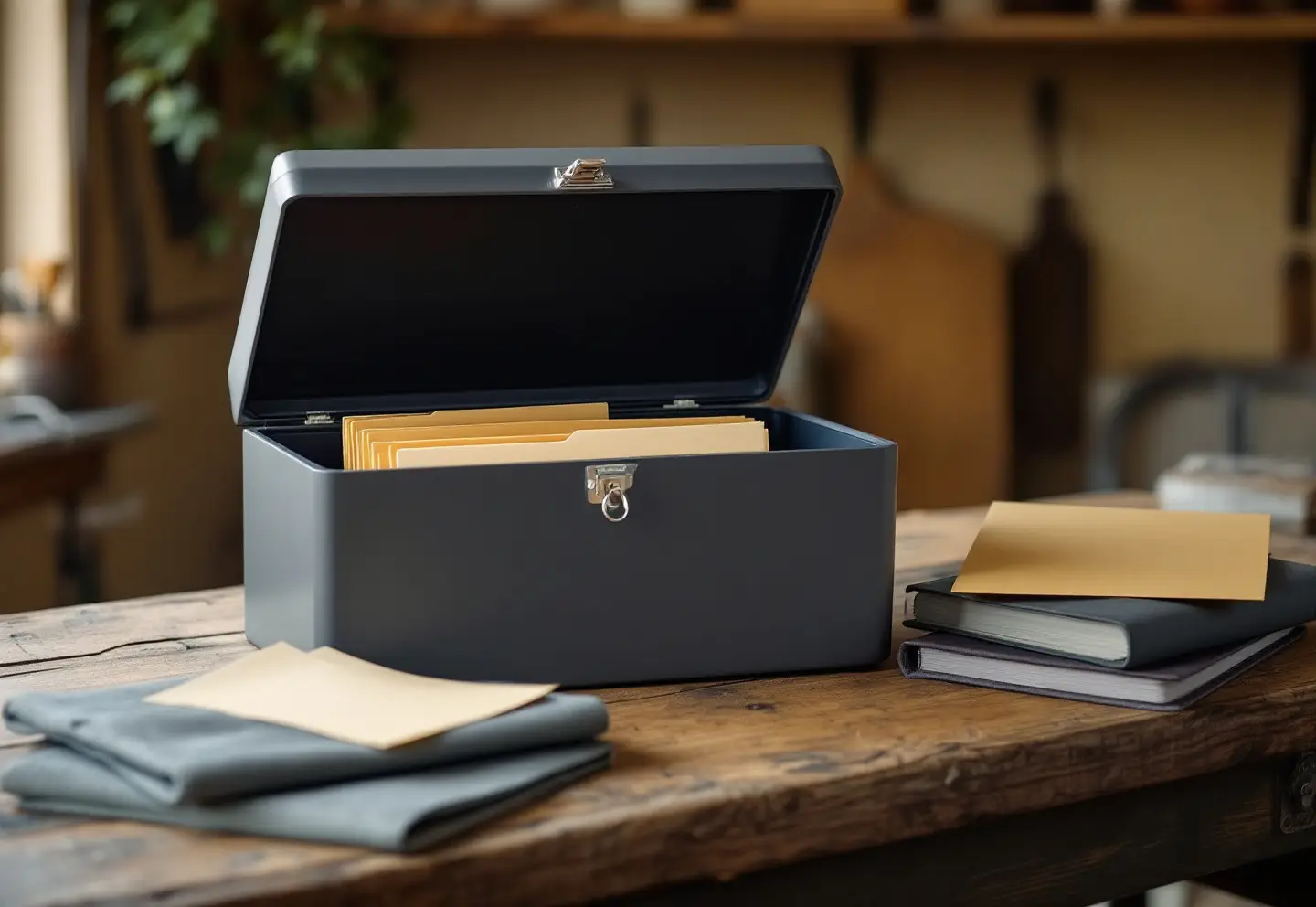
Fireproof Safes for Documents: Chests, File Boxes, Bags and What the Ratings Mean
How to choose a fireproof safe, document box or bag for papers and media: UL Class 350 vs 125, 30 minutes vs 1 hour, water ratings and what to keep inside.