Choosing a Dehumidifier for a Basement Records Room
 Margaret Thibodeau10 min read
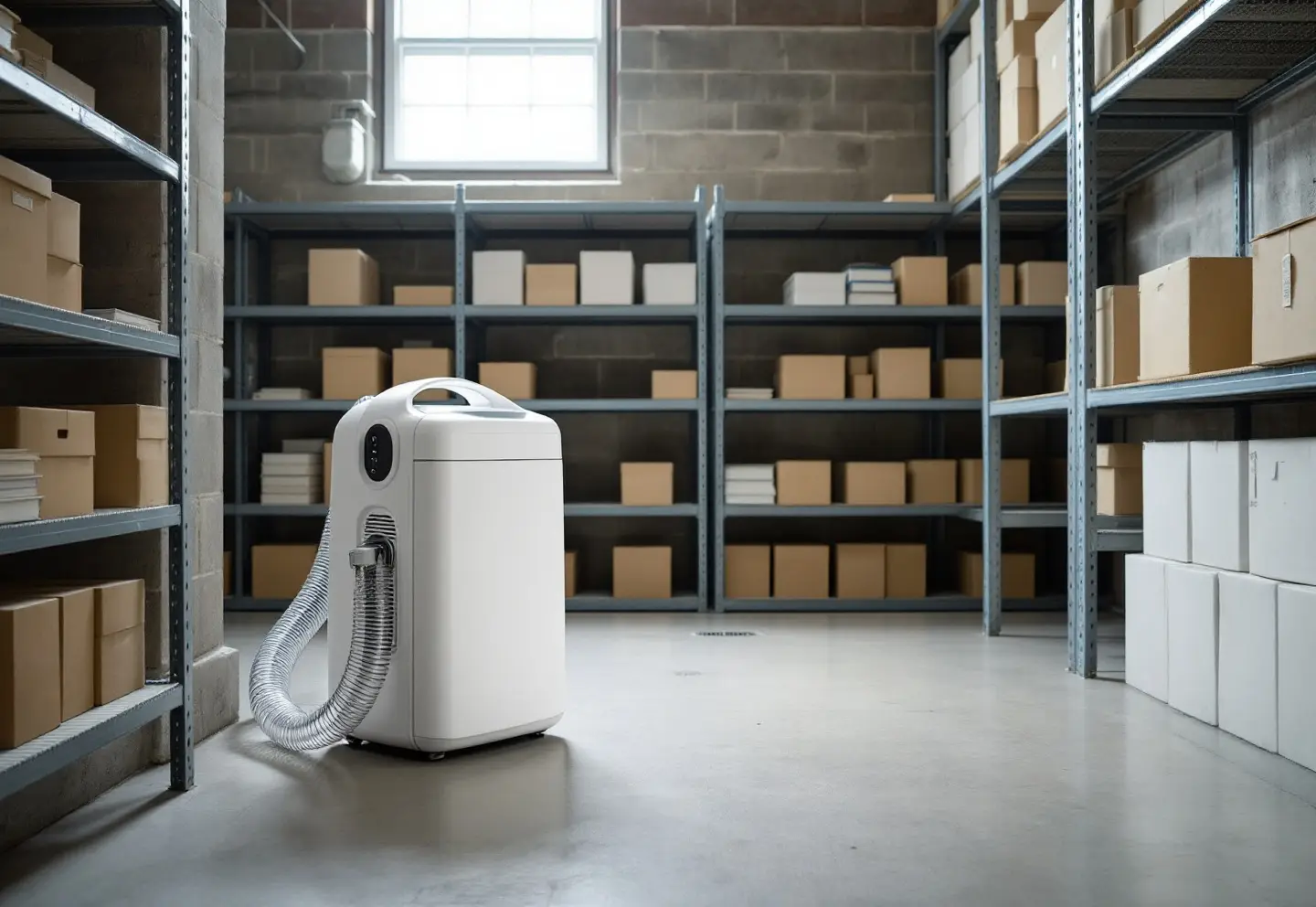
For a basement records room, buy a dehumidifier sized for the room and how damp it gets, judged by its capacity under the 2019 Department of Energy test. Give it continuous drainage, either a hose to a floor drain or a built-in pump, so it never stops because a bucket filled on a Friday. It should restart on its own after a power cut and be rated to run at the cool temperatures basements actually have. Then check its work with a separate hygrometer at shelf height, aiming for a steady 30 to 50 percent relative humidity and acting fast above 60. Closets, cabinets and safes need something smaller, which is the second half of this guide.
Archivist’s picks
 For: a basement
Waykar large basement dehumidifier
A large-capacity unit for a whole basement records area.
$249.99 Price checked at Amazon Oct 23, 2026, 12:25 AM ET
Get it on Amazon For: no bucket to empty
hOmeLabs dehumidifier with built-in pump
Pumps the water up and out, so no bucket to empty.
$309.99 Price checked at Amazon Oct 23, 2026, 12:24 AM ET
Get it on Amazon For: a records room
Midea 22-pint dehumidifier
A smaller unit for a records room or office.
$194.99 Price checked at Amazon Oct 23, 2026, 12:25 AM ET
Get it on Amazon
Product prices and availability are accurate as of the date/time indicated and are subject to change.
Who needs one, and what it can and cannot do
In most small towns I know, the permanent records end up in the basement. So do the historical society's donations, the church's registers and the family papers in the house down the road. Basements are cool, and cool air at the same moisture content runs at a higher relative humidity than the warmer floors above. In summer, humid outdoor air leaks in, meets the cool walls and floor, and the room reads 65 or 70 percent while upstairs feels fine. That is mold weather for paper.
A dehumidifier pulls water out of the air. In a records room it does four jobs:
- holds summer humidity down below the mold line, ideally in the 30 to 50 percent band
- keeps the air near cold walls from getting dangerously damp, which you can check with the dew point calculator by entering the wall temperature
- flattens daily swings, which bound volumes and photographs dislike nearly as much as damp itself
- helps a room recover after a minor leak once the standing water is gone
It cannot fix water coming in. Clogged gutters, downspouts dumping against the foundation, grading that slopes toward the house, a cracked wall or a dryer venting into the basement will beat any machine. Fix those first, or at least at the same time. And a dehumidifier alone will not dry a flooded room; Water in the records room: the first 48 hours covers what to do with wet records and when to call for help.
Capacity, and why the pint numbers changed
Dehumidifier capacity is stated in pints of water removed per day under standard test conditions. In 2019 the Department of Energy changed its test procedure for dehumidifiers. The old test ran at warm, sticky conditions around 80 °F; the current one runs at 65 °F, much closer to a real basement. Cooler air gives up less water, so the same machine earns a smaller pint number under the new test.
That matters when you shop. Older articles, older boxes and a lot of advice online use the old numbers. The large portable machines that were sold as 70-pint units before the change are generally sold as 50-pint units after it, and they did not get any weaker. Compare like with like: look for a rating stated under the current (2019) DOE test, and ignore any figure that does not say which test it came from.
The label is a comparison tool, not a promise. In a 60 °F basement in May, any compressor dehumidifier will pull out less water per day than its rating.
Cold basements and operating temperature
Most household dehumidifiers work like a small refrigerator. A fan pulls room air across a cold coil, water condenses on the coil and drips into the bucket or drain, and the dried air passes over the warm side of the system and back into the room, slightly warmer than it came in.
In a cold room the coil can frost over. Better units sense this and run a defrost cycle, but output drops as the room gets colder, and below the minimum operating temperature stated in the manual the machine is mostly running its fan. Basements in northern states often sit in the 50s °F in spring, just when snowmelt is soaking the ground. Read the manual's stated operating range before you buy, and look for automatic defrost.
Desiccant dehumidifiers work differently. They pass air over a wheel or bed of drying material and use a heater to drive the water back out. They keep working in cold rooms, but they use more electricity and warm the room more. Thermoelectric minis, the small quiet ones meant for closets, remove only a little water each day and are no match for a basement.
Drainage: bucket, hose or pump
A bucket is fine for a room someone visits every day. In a records room it is a liability. When the bucket fills, the machine shuts off, and every clerk I know has a story about a bucket that filled on a Friday afternoon before a humid weekend.
Continuous drainage solves that. A gravity hose works if there is a floor drain lower than the unit's drain outlet and the hose runs downhill the whole way. A built-in condensate pump pushes the water up and over, to a laundry sink or a drain line across the room, when there is no floor drain or the drain is higher than the outlet. A pump is one more part that can fail, so pick a unit that shuts off and signals an error when the pump stops.
Wherever the hose goes, it must never run above shelving or boxes. Check the fitting at the machine a few days after setup. A dripping hose in a records room is the opposite of the point.
Sizing by room and dampness
Sizing charts written for the old pint ratings will mislead you, and the honest answer depends as much on how damp the room gets as on its floor area. Start from what you can observe.
| Room condition | Signs | What to look for |
|---|---|---|
| Closet, cabinet or safe | Musty smell in one enclosed space | A mini dehumidifier or rechargeable silica canister, with a hygrometer inside |
| One small room, damp in summer | Hygrometer in the 55 to 65 % range in humid months | A small-room unit with continuous drain and auto restart |
| Full basement, damp in summer | 60 to 70 %, musty smell, sweating cold-water pipes | The largest portable class (about 50 pints on the current label), drain hose or pump |
| Wet basement | Damp patches on walls or floor, water after storms | The largest class with a pump, plus fixing the water source; consider more than one unit |
When in doubt, size up. A larger unit reaches the set point and cycles off; an undersized one runs nonstop, wears itself out and still loses a humid week in August. If a machine runs constantly and the hygrometer never reaches the set point, it is too small for the room or the room is too leaky for any machine.
What matters in the specs
| Feature | Why it matters | What to look for |
|---|---|---|
| Capacity | Determines whether it can keep up in July | Pints per day under the 2019 DOE test, sized to the table above |
| Continuous drain | No full-bucket shutoffs | A threaded hose outlet that works with the bucket removed |
| Built-in pump | No floor drain, or the drain is higher than the outlet | Integrated pump with its own hose and a pump-failure alarm |
| Auto restart | Power cuts happen when nobody is there | Resumes its last settings after an outage |
| Low-temperature operation | Basements run cool in spring and fall | Stated operating range down into the low temperatures your room sees; automatic defrost |
| Humidistat range | Many units cannot be set low enough, or step in large increments | A set point at or below 45 %, adjustable in small steps |
| Built-in humidity readout | Convenient, but often several points off | Treat it as a guide and verify with a separate hygrometer |
| Filter | Dust on the coil cuts output | Washable filter you can reach without tools, with a reminder light |
| Energy rating | It may run thousands of hours a year | ENERGY STAR certification |
| Wheels and handle | You will move it to the damp corner | Casters and a solid handle; units are heavier than they look |
The basement units below cover the three common situations: the large unit with a hose to a floor drain, the same class with a built-in pump, and a smaller machine for a single room.
Archivist’s kit
Waykar large basement dehumidifier
A large-capacity unit for a whole basement records area.
- Maker rates it for up to 5,000 sq ft
- Humidity setting from 30 to 80 %
- Energy Star certified
$249.99 Price checked at Amazon Oct 23, 2026, 12:25 AM ET
Get it on AmazonhOmeLabs dehumidifier with built-in pump
Pumps the water up and out, so no bucket to empty.
- Built-in condensate pump
- App control over Wi-Fi
- Rated 50 pints a day (maker figure)
$309.99 Price checked at Amazon Oct 23, 2026, 12:24 AM ET
Get it on AmazonMidea 22-pint dehumidifier
A smaller unit for a records room or office.
- Maker rates it for 1,500 sq ft
- Humidity setting from 35 to 85 %
- Energy Star certified
$194.99 Price checked at Amazon Oct 23, 2026, 12:25 AM ET
Get it on Amazon
Product prices and availability are accurate as of the date/time indicated and are subject to change.
Picked from maker specifications and published reviews. We have not bench-tested these units.
For closets, cabinets and safes
Not every damp spot is a whole room. A hall closet full of family papers on an outside wall, a flat file in a cool corner, a fire safe that smells faintly musty when you open it: these need a small, contained answer.
A mini dehumidifier, usually thermoelectric or a small desiccant model, can keep a closet in line if the door stays shut. A rechargeable silica gel canister needs no power while it works; when its indicator changes color, you plug it in or warm it to drive the water out and use it again. Fire safes in particular can run damp inside, for reasons explained in our guide to fireproof safes for documents, and a canister sized for the safe is a cheap fix.
Do not overshoot. Silica gel in a tightly closed cabinet can pull the air well below 30 percent, which leaves paper and leather brittle and makes photographs curl. Put a hygrometer inside the space so you know what the desiccant is doing.
Archivist’s kit

Eva-Dry E-333 renewable mini dehumidifier
A cordless silica gel unit for a closet or cabinet that you recharge by plugging in.
- No cord while in use
- Lasts weeks between recharges
- Indicator shows when to recharge
$14.97 Price checked at Amazon Oct 23, 2026, 12:24 AM ET
Get it on Amazon
Rechargeable silica gel bags, 2 x 500 g
Reusable desiccant bags for a cabinet, chest or safe.
- Two 500 g bags
- Reactivate in a microwave or oven
- Reusable
$19.99 Price checked at Amazon Oct 23, 2026, 12:24 AM ET
Get it on Amazon
ThermoPro TP50 hygrometer
A simple digital thermometer and humidity gauge for a shelf.
- Stated accuracy about ±2 to 3 % RH
- Shows highs and lows
- Battery powered
$10.49 Price checked at Amazon Oct 23, 2026, 12:24 AM ET
Get it on Amazon
Product prices and availability are accurate as of the date/time indicated and are subject to change.
Picked from maker specifications and published reviews. We have not bench-tested these units.
Setup and care
Placement
Put the unit in the open, near the dampest part of the room but not against the shelving, with the clearance around the intake and exhaust that the manual asks for. Point the exhaust into the room, not at boxes. Keep records at least a few inches off the floor and away from foundation walls whatever the machine is doing.
Power
Plug it straight into a grounded wall outlet, not an extension cord. Basement outlets should be GFCI-protected under current electrical codes; if yours trips often, have an electrician look at it rather than moving the machine to an unprotected outlet.
Set point and verification
Start with the humidistat around 45 percent, then put a separate hygrometer on a shelf in the middle of the stacks and give it a few days. Adjust the set point until the hygrometer, not the machine's own display, reads in the 40s. If you can, use a logging hygrometer so you see nights and weekends, not just the moments you happen to visit. Environmental monitoring for a records vault covers logger placement and how to read the graph.
Keep the windows shut in summer
Opening basement windows on a warm, humid day feels like airing the place out. It is the opposite. Summer air at 80 °F and 60 percent relative humidity has a dew point near 65 °F. Let it into a basement whose walls sit in the low 60s and it condenses on the walls and pipes.
Maintenance
Clean or rinse the filter every few weeks in the humid season. Look at the hose and fittings when you clean the filter. If you do use the bucket, wash it now and then; standing water grows slime. Before winter, decide whether to leave the unit running: once the heat comes on, many basements dry out by themselves, and a unit on its humidistat will simply idle. If the room falls below about 35 percent, turn the machine off for the season.
Workbench shortlist
- 1Get it on Amazon
Waykar large basement dehumidifier
For: a basement$249.99 Price checked at Amazon Oct 23, 2026, 12:25 AM ET
- 2Get it on Amazon
hOmeLabs dehumidifier with built-in pump
For: no bucket to empty$309.99 Price checked at Amazon Oct 23, 2026, 12:24 AM ET
- 3Get it on Amazon
Midea 22-pint dehumidifier
For: a records room$194.99 Price checked at Amazon Oct 23, 2026, 12:25 AM ET
Product prices and availability are accurate as of the date/time indicated and are subject to change.
Run the numbers first: Dew point calculator.
Frequently asked questions
What size dehumidifier do I need for a basement?
Size by dampness as much as floor area. A full basement that reads 60 to 70 percent in summer usually needs the largest portable class, about 50 pints under the 2019 DOE test, with a drain hose or pump.
Can I run a dehumidifier in a cold basement?
Yes, within the operating range in the manual. Compressor units lose output in cold rooms and need automatic defrost. Desiccant units work better in the cold but use more power.
Where should a basement dehumidifier drain?
To a floor drain by a downhill hose, or through a built-in pump to a sink or drain line. Never route the hose above records, and check the fittings after setup.
What humidity should a basement with records be?
Aim for a steady 30 to 50 percent relative humidity, and act quickly if it stays above 60. Check at shelf height with a separate hygrometer.
Is a small dehumidifier enough for a closet of papers?
Usually, if the door stays closed. A mini dehumidifier or a rechargeable silica canister will do, with a hygrometer inside to make sure it does not dry the space too far.
Should a dehumidifier run all the time?
Let the humidistat decide. Set it near 45 percent and leave it on continuous drainage so it runs when the room needs it and idles when it does not.
Keep reading

Silverfish, Booklice, Roaches and Mice: Pest Management for Records Storage
A conservator's checklists for keeping silverfish, booklice, roaches and rodents out of records storage: traps, a trap log, humidity, freezing, and no sprays.
Fireproof Safes for Documents: Chests, File Boxes, Bags and What the Ratings Mean
How to choose a fireproof safe, document box or bag for papers and media: UL Class 350 vs 125, 30 minutes vs 1 hour, water ratings and what to keep inside.
Environmental Monitoring for a Records Vault: Loggers, Targets and Reading the Graph
A practical checklist for monitoring temperature and humidity in a records vault, with logger placement, dehumidifier advice and how to read the logger graph.