The Sexton's Book: Cemetery Records and Burial Registers as Local History Sources
 Owen Lachance8 min read
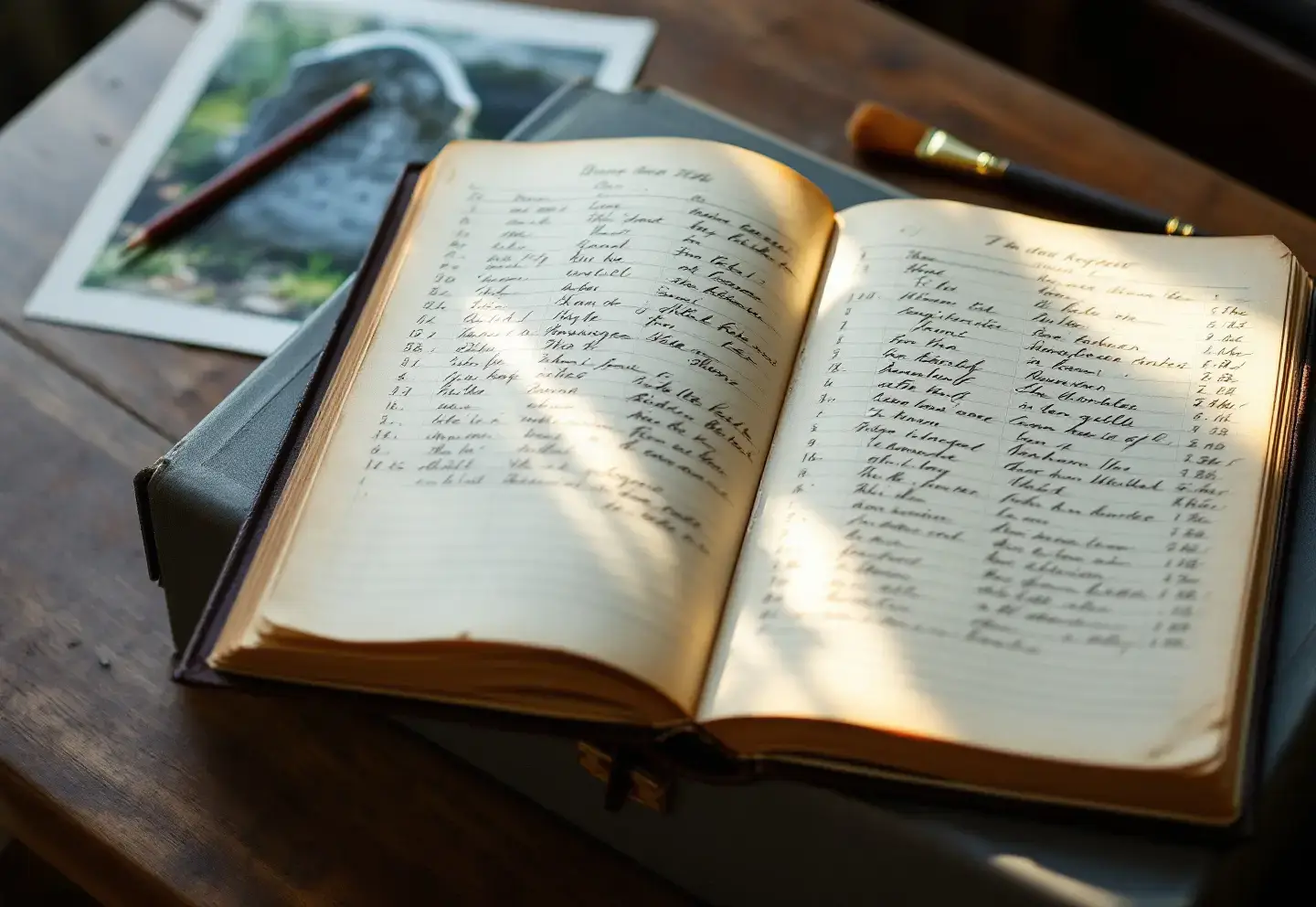
The first days of November bring a particular kind of visitor to a small historical society. All Saints' and All Souls' have a way of turning people toward their dead, and somewhere between raking leaves and the first snow, a few of them decide it's time to find great-grandmother. They walk the cemetery first. They usually come to us second, a little discouraged, because the stone they were looking for isn't there.
I want to tell you a story about one of those searches. It's a composite, stitched together from many searches like it over the years, with the names and places left out, but every turn in it is one I have watched happen more than once.
A grave with no stone
A woman comes in looking for her great-great-grandfather, a mill hand who died young, in winter, sometime in the 1880s. The family Bible gives a year and nothing else. She has walked every row of the town cemetery and found his wife, who outlived him by forty years and lies under a tidy granite marker. She has not found him.
The stones can only tell you what someone paid to have carved. Paper is less selective, so we go to the paper.
The town's sexton's book turns up in the clerk's vault, where it has sat for decades between a run of dog license registers and a box of old warrants. It's a narrow, tall volume, the kind a sexton could carry to the graveside, and it lists interments in the order they happened: date, name, age, a lot number, sometimes a cause of death, often the undertaker. Infants appear as "child of" with no first name. In the winter section of the right year, there he is, with an age, a cause written in a hand that takes some reading, and one more detail the family never knew. He was not buried in January at all. He was placed in the receiving tomb and buried in April.
That is the first gift cemetery records give a local historian. Northern towns couldn't dig graves in frozen ground, so the dead of winter waited in a stone vault built into a hillside until the thaw. The sexton's book records two dates, and the gap between them is a small piece of social history about how a town managed death before backhoes.
The second gift comes from the lot map. His lot number doesn't match the lot where his wife lies. The map, a hand-drawn plan of sections and numbered lots pasted inside the cover of the cemetery association's ledger, shows that lot under a different surname entirely. The ledger, which records lot sales the way a registry records deeds, shows that it was bought by his wife's father. He was buried with his in-laws, under their family stone, which carries the names of their own children and not his.
Except it once did. A typescript gravestone transcription survey, made by volunteers generations ago and filed at our society, lists a small marble tablet on that lot with his name and dates. Marble weathers badly, and the tablet has since fallen, sunk or broken; it is not there now. The survey is the only place its inscription survives.
Then the church burial register. His wife was a member of one of the village congregations, and the minister kept his own record of funerals: the date of the service, the officiant, and, for him, the names of his parents and the town in Quebec he came from. That one line opens a branch of the family she didn't know existed.
Four kinds of paper, none of them a death certificate, each holding something the others don't.
What each kind of record holds
The particulars vary by place, era and the habits of whoever held the job. These are the sources I check, roughly in the order I check them.
- Sexton's books and interment registers. The chronological spine. Look for date of burial, name, age, residence, lot or grave location, cause of death, undertaker, and notes on removals and reburials. Later registers are often printed forms with ruled columns; earlier ones are whatever the sexton chose to write.
- Lot maps and plats. They show the layout of sections and lots, and they reveal graves that have no marker. Compare editions if more than one survives. Lots get subdivided, renumbered and resold, and the older map may be the only one that matches the older register.
- Lot ownership ledgers and lot deeds. Who bought a lot, when, and who inherited the right to be buried in it. Some towns recorded cemetery lot deeds at the registry alongside land deeds, which is one more reason to know your way around the land records. Our guide to reading a nineteenth-century deed book is a good primer if those volumes are unfamiliar.
- Burial permits. In many places, by the late nineteenth or early twentieth century, a permit from the local registrar was required before burial. Where they survive, they often sit in the town clerk's files and can fill gaps in the death registrations.
- Undertakers' and funeral home records. Private business records, but often generous with detail: next of kin, payment, casket, the name of whoever made the arrangements. Some find their way into historical societies when a business closes or changes hands.
- Church burial registers. Kept by clergy, sometimes with parents' names, birthplace and cause of death. Meeting records serve the same purpose for Friends' burial grounds.
- Cemetery association minutes and accounts. Fence repairs, perpetual care funds, disputes over lot boundaries, the decision to build a receiving tomb or a new gate. Dull reading, until you need to know when a section was opened.
- Gravestone transcription surveys. Records made by Depression-era survey workers, patriotic and lineage societies, and local volunteers. They preserve inscriptions that weather has since taken, and they deserve to be treated as primary sources in their own right.
Surveying the stones, gently
Many societies decide sooner or later to make their own transcription survey, and it's one of the best volunteer projects I know. It gets people outdoors, it produces a record future researchers will thank you for, and it teaches careful reading. It also puts a lot of enthusiastic hands near fragile stone, so it's worth setting some rules first.
Get permission from whoever owns or manages the cemetery before you start, whether that's a town commission, a church or a private association. Then plan the survey like a records project and not a stroll:
- Make or copy a map, and give every stone a number tied to its row and position.
- Transcribe each inscription exactly as carved, spelling and line breaks included. Note what is illegible instead of guessing.
- Record material (slate, marble, sandstone, granite, metal), shape, condition, and any carver's mark or motif.
- Photograph every face of every stone, plus a wider shot showing its position in the row.
The ethics of photographing stones come down to two ideas: leave the stone exactly as you found it, and remember that some of these graves still belong to living families.
On the first point, the old tricks are out. No shaving cream, chalk, flour or powders to make lettering stand out; they leave residues that feed biological growth and wear the surface. No wire brushes, no scraping lichen, no resetting a leaning stone yourself. Rubbings are banned outright in many cemeteries and best avoided everywhere, because the pressure and the wax can damage soft or cracked stone. Light does the work instead. Early morning or late afternoon sun raking across the face will bring up shallow carving, and a large mirror or a flashlight held at a low angle can do the same in shade.
On the second, be thoughtful about recent burials. Don't photograph mourners or a fresh grave during a visit. Ask yourself whether a family would want a photograph of a child's grave from twenty years ago posted on the open web, with the location attached. For older sections the answer is usually easy. For newer ones, consider holding images in your own files and sharing them on request.
The register on the kitchen table
Sooner or later a sexton's book or a burial register will arrive at your door in a grocery bag, offered by the grandchild of the last person who held the job. Before you get excited, ask who owns it. A register kept for a town cemetery may be a public record that never stopped belonging to the town, and the right home for it may be the clerk's vault with a copy at the society. Our piece on building a local history collection from attic donations covers those ownership conversations in more detail.
Wherever it ends up, the handling is the same. These books were made to be used outdoors, in all weather, by people with dirty hands, and many have spent a century in damp outbuildings since. Expect loose boards, a split spine, fading ink and pages with water stains.
- Box it. A well-fitted archival box does more for a fragile register than any repair a volunteer could attempt.
- Leave old repairs and loose pages where they are, and don't add tape. Note loose items on a slip of acid-free paper kept with them.
- Keep it flat and supported when open. Never photocopy it face-down.
- Write down where it came from, who gave it, and when, before that knowledge walks out the door.
- Make a careful digital copy so the original can rest. Our guide to scanning bound volumes without breaking them is written for exactly this kind of book.
Once the register is copied and indexed, it becomes something more than a list of names. You can see epidemics arrive and leave in the clustering of children's burials. You can watch the receiving tomb fill each winter and empty each spring. You can follow the mill's arrival in the surnames, and its closing in the removals, as families dug up their dead and took them to wherever the work had gone.
The woman searching for her great-great-grandfather got her answer, and something else besides: the date he came out of the receiving tomb, which she now marks every April. More of what we've written for researchers and volunteers is gathered under archives and local history.
Keep reading
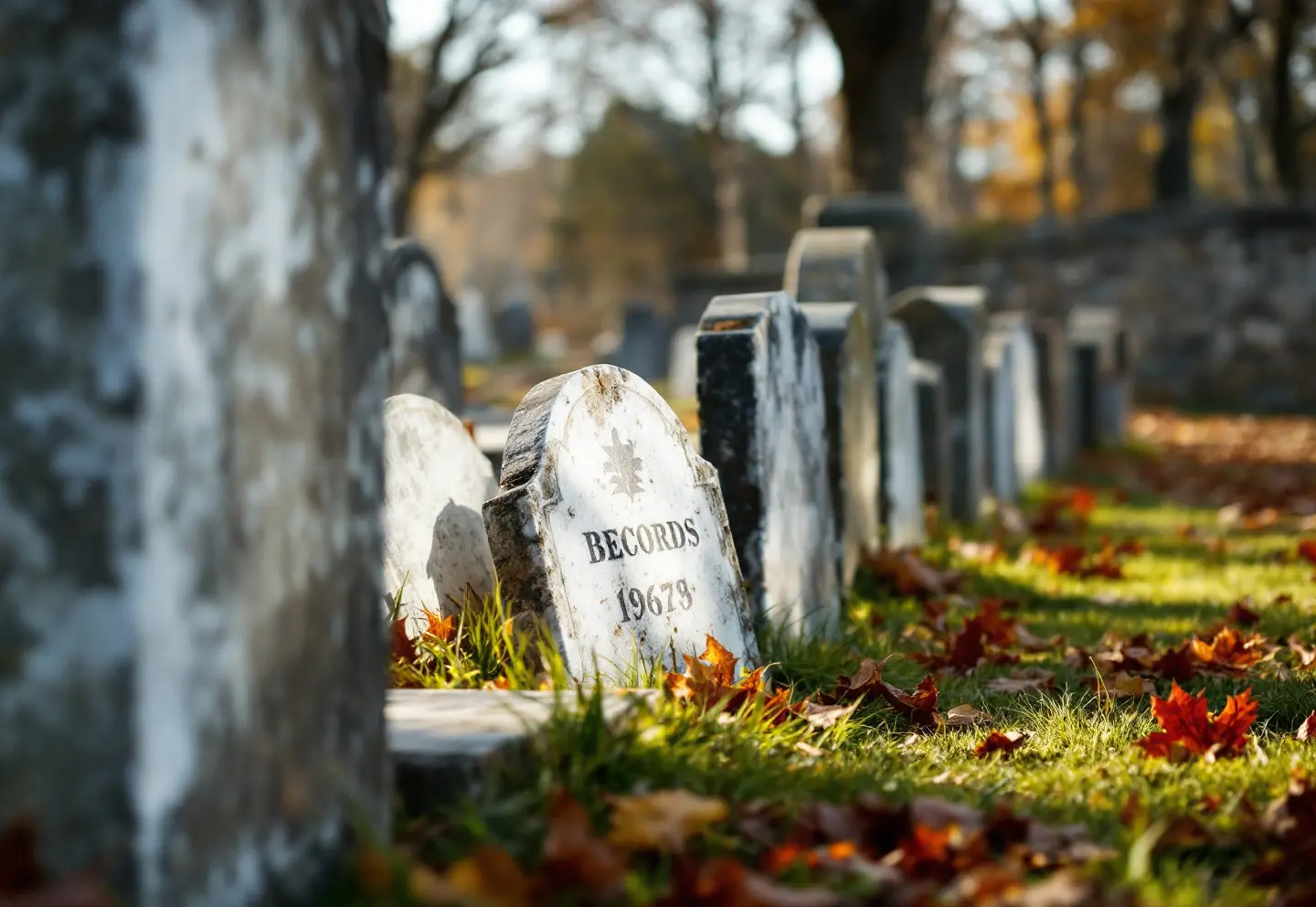
How to Find a Grave in a Cemetery (and Cemetery vs Graveyard)
How to find a grave in a cemetery: pin down the cemetery, ask for sexton records, interment registers and plot maps, then read worn stones without chalk.

How to Search Newspaper Archives: Free Sources, Paid Sources and Microfilm
How to search newspaper archives online and on microfilm: free sources, paid databases, library access, OCR errors and search habits that find old local news.

What Is Microfiche? How to Read, Print and Scan It
What is microfiche, how does it differ from microfilm, and where can you still find a microfiche reader? A plain guide to reading, printing and scanning fiche.